
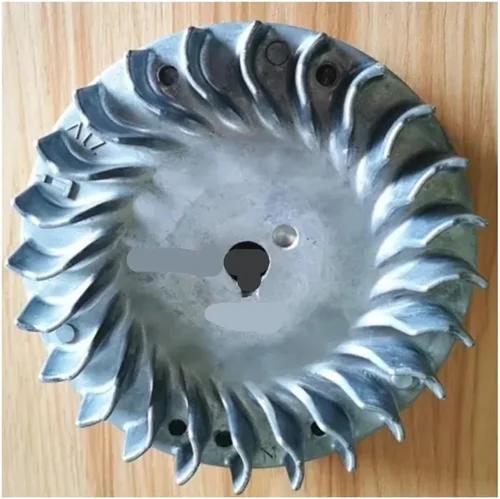
When your Honda GCV160 engine suddenly loses spark—leaving your lawnmower, pressure washer, or generator dead in its tracks—the flywheel is often the silent culprit. While many assume ignition coils or spark plugs are to blame, a failing or improperly installed flywheel can disrupt the precise magnetic timing required for consistent spark generation. This comprehensive buying guide is designed specifically for anyone facing a “no spark” issue on their GCV160 engine and seeking the right replacement flywheel to restore reliable performance.
In this guide, you’ll learn how to identify whether your flywheel is truly the problem, what specifications matter most when selecting a replacement, and how to avoid costly mistakes that could leave you with another no-spark scenario. We’ll walk through key factors like material quality, magnet strength, compatibility, and installation nuances—all tailored to the unique design of the Honda GCV160. Whether you’re a DIY homeowner, a small equipment repair technician, or a seasoned mechanic, this guide equips you with expert-level knowledge to make a confident, informed purchase.
The market for GCV160 flywheels is surprisingly crowded, with options ranging from ultra-cheap knockoffs to OEM-grade replacements and high-performance aftermarket units. Unfortunately, not all flywheels are created equal—and choosing the wrong one can result in wasted money, repeated no-spark issues, or even damage to other ignition components. Our goal is to cut through the confusion, highlight what truly matters, and help you select a flywheel that delivers reliable spark, long-term durability, and value for your specific application.

What to Look for When Buying Buying Guide
1. Compatibility with Honda GCV160 Engine
The single most critical factor when buying a replacement flywheel for a no-spark issue is ensuring it’s fully compatible with the Honda GCV160 engine. This engine is used in a wide range of equipment—from residential lawnmowers to light-duty pressure washers—and while the basic design is consistent, subtle variations exist between model years and applications. A flywheel that fits physically but doesn’t match the original’s magnetic configuration or keyway alignment will fail to generate spark.
Always verify the part number. The OEM Honda flywheel for the GCV160 typically carries part number 13300-Z0D-003 or 13300-Z0D-013, depending on the specific variant. Cross-reference this with your engine’s model and serial number, which are stamped on the engine block. If you’re buying aftermarket, ensure the seller explicitly states compatibility with the GCV160 and, if possible, confirm it matches your equipment’s make and model (e.g., Honda HRR216 lawn mower).
2. Magnet Strength and Pole Configuration
The flywheel on the GCV160 contains permanent magnets that rotate past the ignition coil, inducing the electrical current needed to create a spark. If these magnets are weak, demagnetized, or improperly aligned, the coil won’t generate sufficient voltage—resulting in a no-spark condition. High-quality flywheels use strong neodymium or ferrite magnets with precise pole placement to ensure consistent timing and spark intensity.
When evaluating replacement flywheels, look for units that specify “high-strength magnets” or “OEM-equivalent magnetic output.” Avoid ultra-low-cost options that don’t mention magnet type—these often use weaker materials that degrade over time or fail under load. A properly magnetized flywheel should produce a noticeable magnetic pull when brought near a steel object, and the poles should be evenly spaced around the inner rim.
3. Build Quality and Material Durability
The flywheel is subjected to extreme rotational forces, heat, and vibration during operation. A poorly constructed flywheel can warp, crack, or lose balance—leading to erratic spark, engine vibration, or even catastrophic failure. High-quality flywheels are typically made from forged or cast steel with precision-machined surfaces to ensure smooth rotation and proper clearance with the ignition coil.
Inspect the finish: a well-made flywheel will have a clean, rust-resistant coating (often black oxide or phosphate) and smooth, burr-free edges. Avoid flywheels with visible casting flaws, uneven surfaces, or rough machining marks. The keyway slot—where the flywheel attaches to the crankshaft—must be clean and accurately sized to prevent slippage, which can alter ignition timing and cause no-spark issues.
4. OEM vs. Aftermarket: Weighing the Options
You’ll encounter two main categories of flywheels: genuine Honda OEM parts and aftermarket alternatives. OEM flywheels are manufactured to Honda’s exact specifications and undergo rigorous quality control. They offer guaranteed compatibility, reliable performance, and often come with a warranty. However, they are typically more expensive and may be harder to source for older equipment.
Aftermarket flywheels can be a cost-effective alternative, especially for older GCV160 engines. Reputable brands like Oregon, Rotary, and FixTech produce high-quality replacements that meet or exceed OEM standards. The key is to choose aftermarket flywheels from trusted suppliers with positive user feedback and clear compatibility information. Avoid generic or unbranded flywheels sold without specifications—these are more likely to fail prematurely or cause ignition problems.
5. Proper Air Gap and Coil Clearance
Even the best flywheel won’t work if the air gap between the flywheel magnets and the ignition coil is incorrect. The GCV160 requires a precise clearance—typically between 0.2mm and 0.5mm—to ensure optimal magnetic induction. If the flywheel is warped, installed incorrectly, or designed with the wrong curvature, this gap can be too large or too small, resulting in weak or no spark.
When installing a new flywheel, always use a feeler gauge to check the air gap after tightening the mounting bolt. Some aftermarket flywheels come pre-balanced and pre-gapped, but it’s still wise to verify. If the gap is off, do not force the coil closer—this can damage the coil or flywheel. Instead, check for debris, warping, or incorrect installation.
6. Warranty and Return Policy
Given the critical role of the flywheel in ignition performance, it’s essential to buy from a seller that offers a solid warranty and hassle-free returns. A no-spark issue can be tricky to diagnose, and sometimes the flywheel isn’t the real problem. If you install a new flywheel and still have no spark, you’ll want the option to return it and investigate other causes (like a faulty coil or grounding issue).
Look for sellers that offer at least a 90-day warranty and accept returns for defective or incompatible parts. OEM parts often come with a one-year warranty, while reputable aftermarket brands may offer 60–180 days. Avoid vendors with “all sales final” policies, especially for low-cost flywheels.
7. User Reviews and Real-World Performance
Before purchasing, read verified customer reviews—especially those from users who replaced a flywheel due to a no-spark issue. Look for patterns: do multiple users report restored spark and reliable operation? Are there complaints about weak magnets, poor fit, or premature failure? Reviews can reveal issues not mentioned in product descriptions, such as compatibility quirks or installation difficulties.
Pay attention to reviews that mention specific equipment (e.g., “fixed no spark on my Honda HRR216 mower”) or include photos of the installed flywheel. These provide valuable context and help confirm the part works as expected. Avoid products with no reviews or only generic, overly positive feedback—these may be fake or unreliable.
8. Price vs. Value: Avoiding the Cheapest Option
While it’s tempting to choose the lowest-priced flywheel, this often leads to disappointment. Ultra-cheap flywheels (under $20) are frequently made with substandard materials, weak magnets, or poor machining. They may work initially but fail within weeks or cause intermittent spark issues. In contrast, mid-range flywheels ($30–$50) from reputable brands offer the best balance of cost, quality, and reliability.
Consider the total cost of ownership: a $25 flywheel that fails in two months costs more in labor and downtime than a $45 unit that lasts three years. Invest in a flywheel that delivers consistent performance and peace of mind—especially if your equipment is used frequently or in critical applications.
Different Types of Buying Guide

Common Buying Mistakes to Avoid
❌ Mistake: Assuming All Flywheels Are Interchangeable
Why it’s bad: The GCV160 shares design elements with other Honda engines, but flywheels are not universally compatible. Using a flywheel from a GCV190 or GXV160 can result in incorrect magnet alignment, improper keyway fit, or mismatched timing—leading to no spark or engine damage.
What to do instead: Always verify part numbers and compatibility. Cross-reference your engine’s model and serial number with the flywheel specifications. When in doubt, consult a Honda parts diagram or contact a dealer.
❌ Mistake: Ignoring the Air Gap During Installation
Why it’s bad: Even a perfect flywheel won’t generate spark if the air gap is incorrect. Too wide, and the magnetic field is too weak; too narrow, and the flywheel can strike the coil, causing damage.
What to do instead: Use a feeler gauge to set the correct gap (typically 0.3mm) after installation. Rotate the engine by hand to ensure smooth clearance with no contact.
❌ Mistake: Buying the Cheapest Option Without Research
Why it’s bad: Low-cost flywheels often use weak magnets or poor-quality steel, leading to premature failure, inconsistent spark, or no spark at all. You may end up replacing it multiple times.
What to do instead: Invest in a mid-range flywheel from a reputable brand. Read reviews, check warranty terms, and prioritize quality over price.
❌ Mistake: Overlooking the Ignition Coil
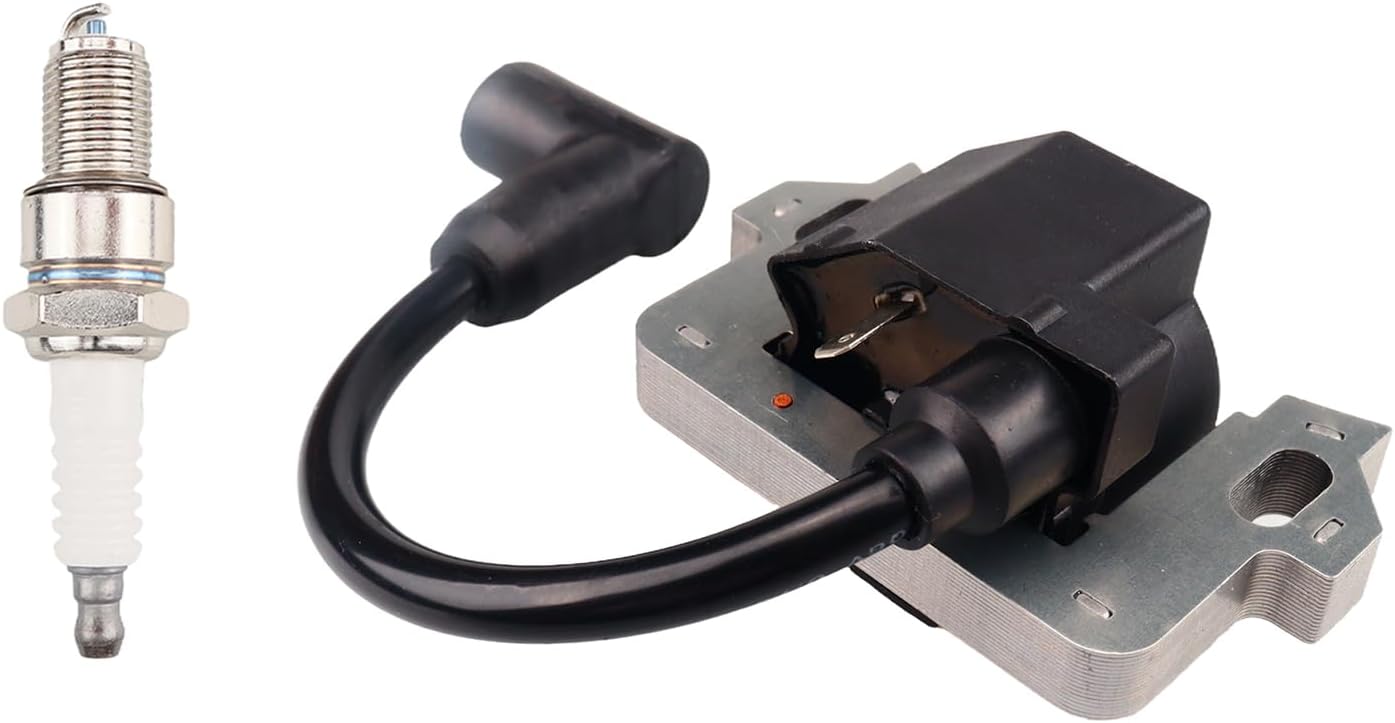
Why it’s bad: A no-spark issue is often misdiagnosed as a flywheel problem when the real culprit is a faulty ignition coil. Replacing the flywheel won’t fix a bad coil.
What to do instead: Test the ignition coil with a multimeter before replacing the flywheel. Check resistance values (typically 2–5 ohms for primary, 8–12k ohms for secondary). If the coil is out of spec, replace it instead.
❌ Mistake: Not Checking for Crankshaft Key Damage
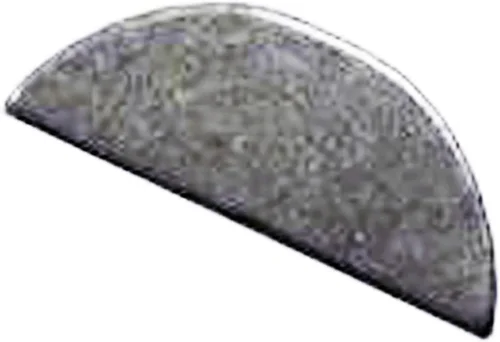
Why it’s bad: The Woodruff key ensures the flywheel is timed correctly on the crankshaft. If the key is sheared or worn, the flywheel can slip, altering ignition timing and causing no spark.
What to do instead: Inspect the key and keyway during flywheel removal. Replace the key if damaged, and ensure the new flywheel’s keyway matches exactly.
❌ Mistake: Skipping the Torque Specification
Why it’s bad: Over-tightening the flywheel bolt can warp the flywheel or damage the crankshaft threads. Under-tightening can cause the flywheel to loosen and fail catastrophically.
What to do instead: Use a torque wrench to tighten the flywheel bolt to Honda’s specification (typically 65–75 ft-lbs for the GCV160). Use a thread locker if recommended.
❌ Mistake: Not Testing After Installation
Why it’s bad: Assuming the new flywheel fixed the problem without testing can leave you stranded if the issue persists.
What to do instead: Reassemble the engine, reconnect the spark plug, and test for spark using a spark tester or by grounding the plug against the engine. If there’s still no spark, recheck the coil, wiring, and grounding.
Budget Guidelines: How Much Should You Spend?
– Entry-Level ($15 – $30): These flywheels are best suited for temporary fixes or equipment used infrequently. Expect basic materials, weaker magnets, and limited durability. Ideal for emergency repairs when a proper replacement isn’t immediately available, but not recommended for long-term use.
– Mid-Range ($35 – $55): This is the sweet spot for most GCV160 owners. Flywheels in this range offer strong magnets, good build quality, and reliable performance. Brands like Oregon and Rotary dominate this category, providing OEM-equivalent parts at a fraction of the cost. Perfect for homeowners and light commercial users.
– Premium ($60 – $90): OEM Honda flywheels fall into this tier. They offer guaranteed compatibility, superior materials, and full warranty support. Best for those restoring equipment to original condition or needing parts for warranty-covered repairs.
– Luxury ($90+): High-performance or custom flywheels with enhanced magnet strength, precision balancing, or lightweight designs. These are overkill for standard GCV160 applications but may appeal to enthusiasts modifying their engines for increased performance.

Expert Tips for Getting the Best Deal
– Buy during off-season sales: Lawn equipment parts often go on sale in late fall or winter. Retailers like Northern Tool, Amazon, and eBay frequently offer discounts on small engine components during these periods.
– Check local small engine shops: While online prices are often lower, local shops may offer installation help, diagnostic advice, or bundle deals on parts like flywheels, coils, and keys.
– Compare total cost, not just price: Factor in shipping, return policies, and warranty. A $40 flywheel with free returns and a 180-day warranty may be a better deal than a $30 unit with high shipping and no returns.
– Look for refurbished or open-box deals: Some retailers sell tested, like-new flywheels at a discount. These can be a great way to save on OEM parts.
– Verify seller reputation: On marketplaces like eBay or Amazon, check seller ratings and feedback. Avoid sellers with low ratings or vague product descriptions.
– Test before final assembly: After installing the flywheel, check for spark before reassembling the engine shroud. This saves time if further troubleshooting is needed.
– Keep the old flywheel for comparison: If the new one doesn’t work, having the old part helps diagnose whether the issue was the flywheel or something else.
– Document your repair: Take photos and notes during disassembly. This helps with reassembly and future repairs.
Frequently Asked Questions
Q: Can a bad flywheel cause no spark on a Honda GCV160?
A: Yes. If the flywheel’s magnets are weak, damaged, or misaligned, the ignition coil won’t generate sufficient voltage to create a spark. This is a common but often overlooked cause of no-spark issues.
Q: How do I test a flywheel for magnet strength?
A: Bring a steel screwdriver or wrench close to the flywheel’s inner rim. You should feel a strong magnetic pull. If the pull is weak or inconsistent, the magnets may be failing. For precise testing, use a gauss meter.
Q: Do I need to replace the ignition coil when changing the flywheel?
A: Not necessarily. If the coil tests within specification, it can usually be reused. However, if the no-spark issue persists after flywheel replacement, the coil may be faulty and should be tested or replaced.
Q: Can I reinstall the old flywheel if the new one doesn’t work?
A: Yes, as long as it wasn’t damaged during removal. However, if the old flywheel was the original cause of the no-spark issue, reinstalling it won’t solve the problem.
Q: Is it safe to use a non-OEM flywheel on a Honda GCV160?
A: Yes, if it’s from a reputable brand and explicitly compatible. Many aftermarket flywheels perform as well as OEM parts and come at a lower cost.
Q: How tight should the flywheel bolt be?
A: The flywheel bolt on the GCV160 should be torqued to 65–75 ft-lbs. Always use a torque wrench to avoid over-tightening, which can warp the flywheel.
Q: What if my engine still has no spark after replacing the flywheel?
A: Check the ignition coil, spark plug, wiring, and grounding. Also verify the air gap and ensure the flywheel key isn’t sheared. If all else fails, consult a small engine technician.
Q: Can a flywheel be repaired instead of replaced?
A: Generally, no. Flywheels with weak magnets or warping cannot be reliably repaired. Replacement is the only safe and effective solution.
Q: How long does a GCV160 flywheel typically last?
A: With proper maintenance, a quality flywheel can last the life of the engine—often 10+ years. Failure is usually due to impact damage, overheating, or poor-quality replacements.
Q: Where can I buy a replacement flywheel for my GCV160?
A: Reputable sources include Honda dealers, Northern Tool, Amazon, eBay, and small engine parts retailers like Jack’s Small Engines or PartsTree.
Our Final Recommendations
– Best for Budget-Conscious Buyers: Oregon 37-353 Flywheel – A high-quality aftermarket option at around $40, offering strong magnets and reliable performance for the price.
– Best Overall Value: Rotary 13300-Z0D-003 Flywheel – Priced around $45, this part matches OEM specifications and comes with a solid warranty. Ideal for most homeowners.
– Best Premium Option: Genuine Honda 13300-Z0D-003 Flywheel – For those who demand OEM perfection, this is the top choice. Expect to pay $70–$90, but with full compatibility and warranty.
– Best for Beginners: FixTech GCV160 Flywheel Kit – Includes the flywheel, key, and installation guide. Great for first-time DIYers who want everything in one package.
– Best for Advanced Users: Performance Plus Neodymium Flywheel – Features upgraded magnets for stronger spark and improved reliability under load. Best for modified engines or high-use applications.
Conclusion: Making the Right Choice
Choosing the right flywheel for your Honda GCV160 no-spark issue isn’t just about swapping parts—it’s about restoring confidence in your equipment’s reliability. By focusing on compatibility, magnet strength, build quality, and proper installation, you can avoid the frustration of repeated failures and ensure your engine starts strong every time.
Remember, the cheapest option isn’t always the best value, and skipping critical steps like checking the air gap or testing the coil can lead to wasted time and money. Use this guide to evaluate your needs, compare options, and make a decision that balances cost, quality, and long-term performance.
Whether you’re repairing a lawnmower, pressure washer, or generator, investing in the right flywheel is a small step that makes a big difference. Take the time to do it right—your equipment (and your weekend plans) will thank you.
Now that you’re equipped with expert knowledge, it’s time to get your GCV160 running again. Order the right flywheel, follow proper installation procedures, and enjoy the satisfaction of a job well done.