
This guide walks you through diagnosing and fixing a gas leak near the ignition coil on a Honda GCV160 engine, commonly found in lawn mowers and small equipment. You’ll learn how to identify the source, safely repair it, and prevent future leaks with proper maintenance.
Key Takeaways
- Gas leaks near the ignition coil are often caused by cracked fuel lines or loose connections, not the coil itself.
- Always disconnect the spark plug and let the engine cool before starting any repair to prevent fire or injury.
- Inspect the carburetor bowl gasket and fuel shut-off valve—these are frequent culprits in GCV160 leaks.
- Use only ethanol-safe fuel lines and OEM or high-quality replacement parts to ensure durability.
- Test for leaks with soapy water after repairs—never use an open flame.
- Regular maintenance every 25–50 hours of use can prevent most fuel system issues.
- If the leak persists after all checks, the carburetor may need cleaning or replacement.
Quick Answers to Common Questions
Tip/Question?
Can I use regular rubber hose instead of fuel line?
No. Regular rubber hose isn’t resistant to gasoline and can swell, crack, or leak. Always use fuel line rated for ethanol-blended fuels.
Tip/Question?
How often should I inspect my GCV160 fuel system?
Check fuel lines and connections every 25–50 hours of use, or at the start of each mowing season.
Tip/Question?
Is it safe to start the engine with the air filter off to check for leaks?
No. Always reinstall the air filter before starting the engine to prevent debris from entering the carburetor.
Tip/Question?
Can a leaking carburetor damage the ignition coil?
Not directly, but gasoline near the coil can cause corrosion or create a fire hazard. Fix leaks promptly.
Tip/Question?
Should I replace all fuel lines at once if one is cracked?
Yes, if the lines are old or brittle. Replacing them all ensures long-term reliability and prevents future leaks.
Introduction: Why Is Gas Leaking Near the Ignition Coil on Your GCV160?
If you’ve noticed a strong gasoline smell or visible fuel dripping near the ignition coil on your Honda GCV160 engine—commonly used in lawn mowers, pressure washers, or generators—you’re not alone. This issue can be alarming, especially because the ignition coil sits close to hot engine parts and electrical components. But don’t panic. In most cases, the leak isn’t coming from the coil itself. Instead, it’s usually due to a problem in the fuel delivery system that’s just located nearby.
The GCV160 is a reliable, overhead cam (OHC) engine known for its durability and efficiency. However, like any small engine, it’s prone to wear and tear over time, especially in the fuel system. Gas leaks near the ignition coil often stem from degraded fuel lines, loose clamps, a faulty carburetor gasket, or a cracked fuel tank. Because gasoline is flammable and the ignition coil generates sparks, even a small leak can pose a serious safety risk.
In this comprehensive troubleshooting guide, you’ll learn how to safely inspect, diagnose, and fix gas leaks around the ignition coil on your GCV160 engine. We’ll walk you through each step with clear instructions, safety precautions, and practical tips. Whether you’re a DIY enthusiast or a first-time repairer, this guide will help you get your engine running safely and efficiently again.
Safety First: Preparing for the Repair
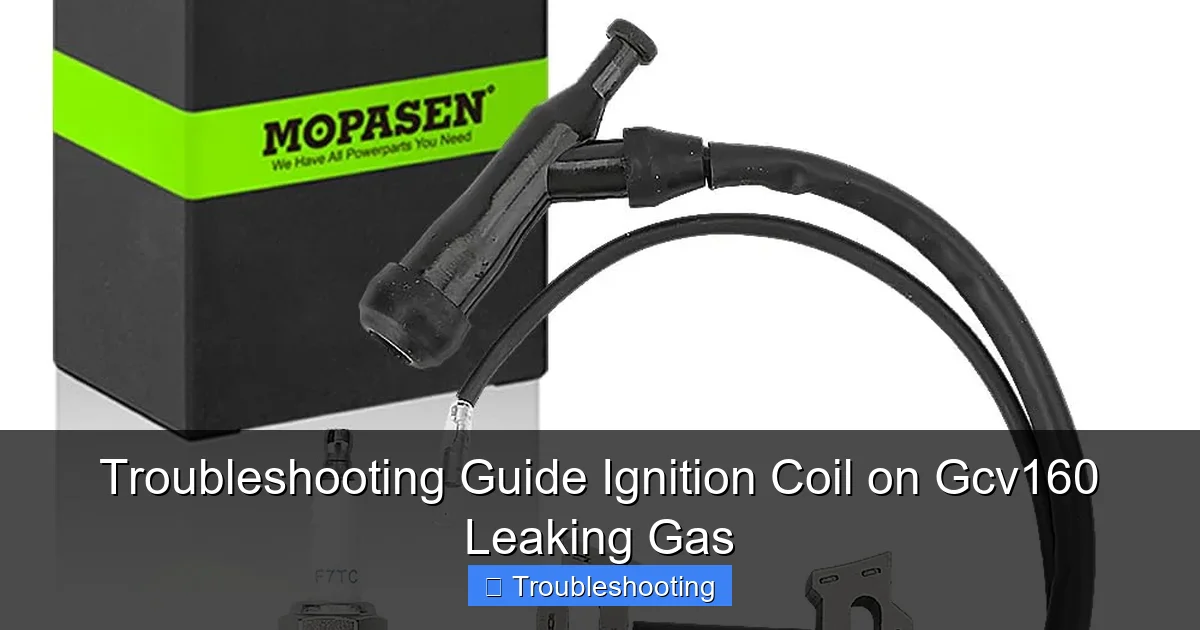
Visual guide about Troubleshooting Guide Ignition Coil on Gcv160 Leaking Gas
Image source: m.media-amazon.com
Before you begin any work on your GCV160 engine, safety must be your top priority. Gasoline is highly flammable, and the ignition coil can produce sparks even when the engine is off. Follow these essential safety steps to protect yourself and your equipment.
Turn Off the Engine and Let It Cool
Never work on a hot engine. Shut off the equipment and allow the engine to cool for at least 30 minutes. This reduces the risk of burns and prevents gasoline vapors from igniting.
Disconnect the Spark Plug
Locate the spark plug wire and gently pull it off the spark plug. To be extra safe, remove the spark plug entirely using a spark plug wrench. This ensures the engine cannot accidentally start while you’re working.
Work in a Well-Ventilated Area
Perform all repairs outdoors or in a garage with the door open. Gasoline fumes are toxic and can accumulate in enclosed spaces. Avoid working near open flames, cigarettes, or electrical sparks.
Wear Protective Gear
Put on safety glasses to protect your eyes from fuel spray and debris. Wear nitrile gloves to prevent skin contact with gasoline, which can cause irritation or dryness.
Have a Fire Extinguisher Nearby
Keep a Class B fire extinguisher (for flammable liquids) within reach. Water won’t work on gasoline fires—only use foam, CO2, or dry chemical extinguishers.
Drain Excess Fuel (Optional but Recommended)
If your GCV160 has a fuel shut-off valve, turn it to the “OFF” position. Then, place a container under the carburetor and loosen the drain screw to empty any remaining fuel. This minimizes spillage during disassembly.
Step 1: Locate the Source of the Leak

Visual guide about Troubleshooting Guide Ignition Coil on Gcv160 Leaking Gas
Image source: jbhauto.co.nz
Now that you’re safely prepared, it’s time to find where the gas is coming from. The ignition coil is mounted near the cylinder head, close to the carburetor and fuel lines. Because of this proximity, fuel leaks often appear to originate from the coil, even when they’re not.
Visual Inspection
Start by wiping down the engine with a clean rag to remove dirt and oil. Then, look carefully around the ignition coil, carburetor, fuel tank, and fuel lines. Use a flashlight to check hidden areas. Look for:
– Wet or shiny spots
– Cracks in plastic or rubber parts
– Discolored or brittle fuel lines
– Loose or missing clamps
Check the Fuel Lines
The GCV160 uses small rubber fuel lines to carry gasoline from the tank to the carburetor. These lines can dry out, crack, or become loose over time. Trace the fuel line from the tank to the carburetor. Pay special attention to where it connects to the carburetor inlet and the fuel shut-off valve (if equipped).
Inspect the Carburetor Bowl and Gasket
The carburetor bowl sits directly below the main body and holds a small amount of fuel. It’s sealed with a rubber or fiber gasket. If this gasket is worn, cracked, or improperly seated, fuel can seep out and drip down toward the ignition coil.
Examine the Fuel Tank and Cap
Check the fuel tank for cracks, especially around the seams and the outlet where the fuel line connects. Also, inspect the fuel cap vent. A clogged vent can create pressure in the tank, forcing fuel out through weak points.
Look for Signs of Overfilling
If you recently filled the tank, check for fuel stains around the filler neck. Overfilling can cause gasoline to spill into the carburetor or air filter housing, leading to leaks.
Step 2: Test for Active Leaks
After your visual inspection, you need to confirm whether the leak is still active. A dry stain doesn’t mean the problem is fixed—there could be a small crack that only leaks under pressure.
Use the Soapy Water Test
This is the safest and most effective way to detect leaks. Mix a few drops of dish soap with water in a spray bottle. Spray the solution over suspected areas, including:
– Fuel line connections
– Carburetor bowl gasket
– Fuel tank outlet
– Shut-off valve
Watch for bubbles forming. Bubbles indicate escaping fuel vapor or liquid. Never use an open flame or lighter to check for leaks—this is extremely dangerous.
Pressurize the Fuel System (Optional)
If you have a fuel pressure tester, you can gently pressurize the system to simulate running conditions. However, this requires specialized tools and should only be done if you’re experienced. Most homeowners can rely on the soapy water method.
Run the Engine Briefly (If Safe)
If you’ve already drained the fuel and are confident there’s no major leak, you can briefly restart the engine (with the spark plug disconnected) to see if fuel starts dripping again. Do this only in a safe, open area and have your fire extinguisher ready.
Step 3: Common Causes and Fixes
Based on your inspection and testing, you should now have a better idea of where the leak is coming from. Below are the most common causes of gas leaks near the ignition coil on the GCV160 and how to fix them.
Cause 1: Cracked or Brittle Fuel Lines
Over time, fuel lines exposed to heat and ethanol-blended gasoline can degrade. They become hard, cracked, or swollen.
How to Fix:
– Cut out the damaged section using wire cutters or a sharp knife.
– Replace it with new fuel line rated for ethanol (look for “ethanol-safe” or “fuel-resistant” labels).
– Use small hose clamps to secure the connections. Avoid over-tightening, which can crush the line.
– Ensure the line isn’t kinked or pinched after installation.
Cause 2: Loose or Missing Fuel Line Clamps
Fuel lines are held in place by small spring clamps or screw clamps. Vibration from the engine can loosen them over time.
How to Fix:
– Re-tighten any loose clamps using pliers or a screwdriver.
– Replace missing or damaged clamps with OEM or high-quality replacements.
– Make sure the fuel line fits snugly over the carburetor inlet and tank outlet.
Cause 3: Worn Carburetor Bowl Gasket
The gasket under the carburetor bowl can dry out, crack, or lose its seal. This allows fuel to leak from the bottom of the carburetor.
How to Fix:
– Remove the carburetor bowl by unscrewing the drain screw and bowl nut.
– Carefully remove the old gasket.
– Clean the mating surfaces with a soft cloth.
– Install a new gasket (available in carburetor rebuild kits).
– Reassemble and tighten the bowl securely—but don’t overtighten, as this can crack the plastic.
Cause 4: Faulty Fuel Shut-Off Valve
Some GCV160 models have a fuel shut-off valve between the tank and carburetor. If the valve is stuck open or has a damaged seal, it can leak.
How to Fix:
– Turn the valve to the “OFF” position and check for leaks.
– If it still leaks, replace the valve with a new one.
– Ensure the valve is installed in the correct direction (arrow pointing toward the carburetor).
Cause 5: Cracked Fuel Tank or Outlet
Plastic fuel tanks can crack due to impact, UV exposure, or age. The outlet where the fuel line connects is especially vulnerable.
How to Fix:
– If the crack is small, you can try a plastic epoxy rated for fuel systems (e.g., JB Weld PlasticWeld).
– For larger cracks or a damaged outlet, replace the entire fuel tank.
– Always use OEM or compatible aftermarket tanks designed for the GCV160.
Cause 6: Overfilled Fuel Tank or Clogged Vent
A clogged fuel cap vent prevents air from entering the tank as fuel is used. This creates a vacuum that can force fuel out through weak points.
How to Fix:
– Clean the fuel cap vent with compressed air or a small wire.
– Avoid overfilling the tank—leave at least ½ inch of space at the top.
– Replace the cap if the vent is permanently clogged or damaged.
Step 4: Reassemble and Test
Once you’ve repaired the leak, it’s time to put everything back together and test your work.
Reconnect All Components
– Reattach the fuel lines and secure them with clamps.
– Reinstall the carburetor bowl and gasket.
– Reconnect the spark plug and wire.
– Ensure all screws and fasteners are tight but not over-torqued.
Refill with Fresh Fuel
Use clean, fresh gasoline with no more than 10% ethanol (E10). Avoid E15 or E85, which can damage small engines.
Perform a Final Leak Check
Before starting the engine, spray soapy water over all repaired areas. Look for bubbles. If none appear, you’re ready to test run.
Start the Engine
Start the engine and let it run for a few minutes. Watch for any signs of leaking. Listen for unusual sounds or smells. If everything looks and sounds good, your repair is successful.
Troubleshooting Persistent Leaks
Sometimes, even after repairs, a gas leak may persist. Here’s what to do if the problem continues.
Check for Hidden Cracks
Some cracks in fuel lines or the carburetor body are microscopic and hard to see. Submerge suspect parts in water and look for bubbles.
Inspect the Air Filter Housing
Fuel can leak into the air filter if the carburetor float is stuck or the needle valve is worn. Remove the air filter and check for gasoline inside the housing.
Consider a Carburetor Rebuild or Replacement
If the carburetor is old or heavily gummed up, internal leaks may occur. A carburetor rebuild kit (available for the GCV160) can replace gaskets, seals, and the float needle. If the carburetor is cracked or corroded, replacement may be the best option.
Consult a Professional
If you’ve tried all steps and the leak continues, it’s time to take your equipment to a certified small engine technician. There may be an internal issue, such as a cracked engine block or head gasket, though this is rare.
Preventing Future Gas Leaks
An ounce of prevention is worth a pound of cure. Follow these tips to keep your GCV160 running smoothly and leak-free.
Use Fresh Fuel
Gasoline degrades over time, especially with ethanol. Use fuel within 30 days, or add a fuel stabilizer if storing longer.
Perform Regular Maintenance
Inspect fuel lines, clamps, and the carburetor every 25–50 hours of use. Replace worn parts before they fail.
Store Properly
When storing your equipment for the season, either drain the fuel system or use a fuel stabilizer and run the engine for a few minutes to circulate it.
Avoid Overfilling
Always leave space in the fuel tank to allow for expansion.
Use Quality Parts
Stick to OEM or high-quality aftermarket parts. Cheap replacements may not withstand fuel exposure or engine heat.
Conclusion: Stay Safe and Keep Your GCV160 Running Strong
Gas leaks near the ignition coil on your Honda GCV160 engine can be scary, but they’re usually fixable with the right approach. By following this troubleshooting guide, you’ve learned how to safely inspect, diagnose, and repair the most common causes—from cracked fuel lines to worn carburetor gaskets. Remember, the ignition coil itself rarely leaks gas; the issue is almost always in the fuel system nearby.
Safety is paramount. Always disconnect the spark plug, work in a ventilated area, and use the soapy water test to confirm leaks. With regular maintenance and attention to detail, you can prevent most fuel-related problems and extend the life of your GCV160 engine.
Whether you’re mowing the lawn, cleaning the driveway, or powering a generator, a well-maintained engine means reliable performance and peace of mind. So take your time, follow the steps, and enjoy the satisfaction of a job well done.