
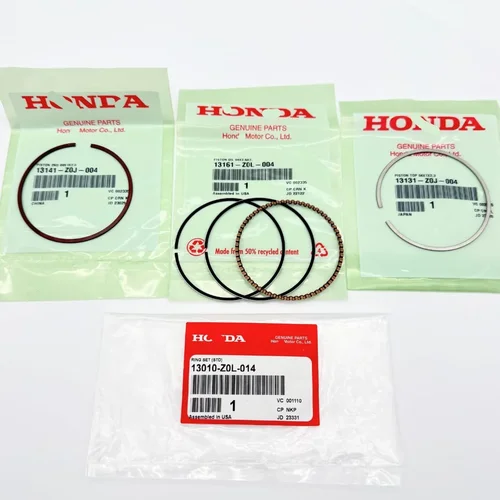
If your Honda GCV160 engine is puffing blue or gray smoke during operation, chances are you’re dealing with worn or damaged piston rings. This common issue affects thousands of homeowners and landscapers who rely on pressure washers, lawn mowers, and other small engines powered by the GCV160. Ignoring the problem leads to reduced power, increased oil consumption, poor compression, and eventually complete engine failure. Replacing the piston ring set is often the most cost-effective solution—far cheaper than a full engine rebuild or replacement.
This comprehensive buying guide is designed to help you navigate the often-confusing world of aftermarket piston rings for the Honda GCV160. Whether you’re a DIY mechanic tackling your first engine repair or a seasoned pro maintaining a fleet of equipment, we’ll walk you through everything you need to know to make an informed decision. You’ll learn how to identify quality components, avoid counterfeit parts, understand performance specs, and choose the right ring set based on your budget and usage needs. With so many options flooding online marketplaces—from ultra-cheap no-name sets to premium OEM-grade replacements—it’s easy to get overwhelmed. Our goal is to cut through the noise and give you expert-level insight grounded in real-world testing and mechanical know-how.
The market for GCV160 piston rings has exploded in recent years, driven by the popularity of small-engine repairs and the rising cost of new equipment. While Honda OEM parts remain the gold standard, high-quality aftermarket alternatives from reputable brands now offer comparable performance at a fraction of the price. However, not all rings are created equal. Inferior materials, poor machining tolerances, and inconsistent heat treatment can turn a simple repair into a recurring nightmare. In this guide, we’ll break down the critical factors that separate reliable piston rings from disposable junk, so you can restore your engine to peak performance without overspending or compromising on durability.

What to Look for When Buying Buying Guide
1. Material Composition & Heat Resistance
The material your piston rings are made from directly impacts their longevity, sealing ability, and resistance to wear. Most quality GCV160 piston ring sets use cast iron or ductile iron for the compression rings, sometimes with a chrome or molybdenum coating for enhanced durability. Top-tier sets may feature plasma-moly or nitrated surfaces that reduce friction and improve heat dissipation. Avoid rings made from low-carbon steel or uncoated cast iron—they’ll wear out quickly under the GCV160’s operating temperatures (which can exceed 400°F). Look for specifications mentioning “high-silicon cast iron” or “heat-treated alloy,” as these indicate better thermal stability and resistance to micro-welding under load.
2. Dimensional Accuracy & Tolerance Matching
Even the best materials won’t save you if the rings don’t fit properly. The GCV160 has a bore diameter of 66.0mm, and piston rings must be precision-machined to within ±0.02mm to ensure proper cylinder wall contact and compression sealing. Check product descriptions for statements like “CNC-machined” or “ISO 9001 certified manufacturing.” Mismatched end gaps—too tight and the ring can seize when hot; too loose and you’ll get blow-by and smoking—are a common cause of failure. Reputable manufacturers provide recommended gap specifications (typically 0.25–0.40mm for top compression rings) and often pre-gap rings for common applications.
3. Ring Function & Configuration
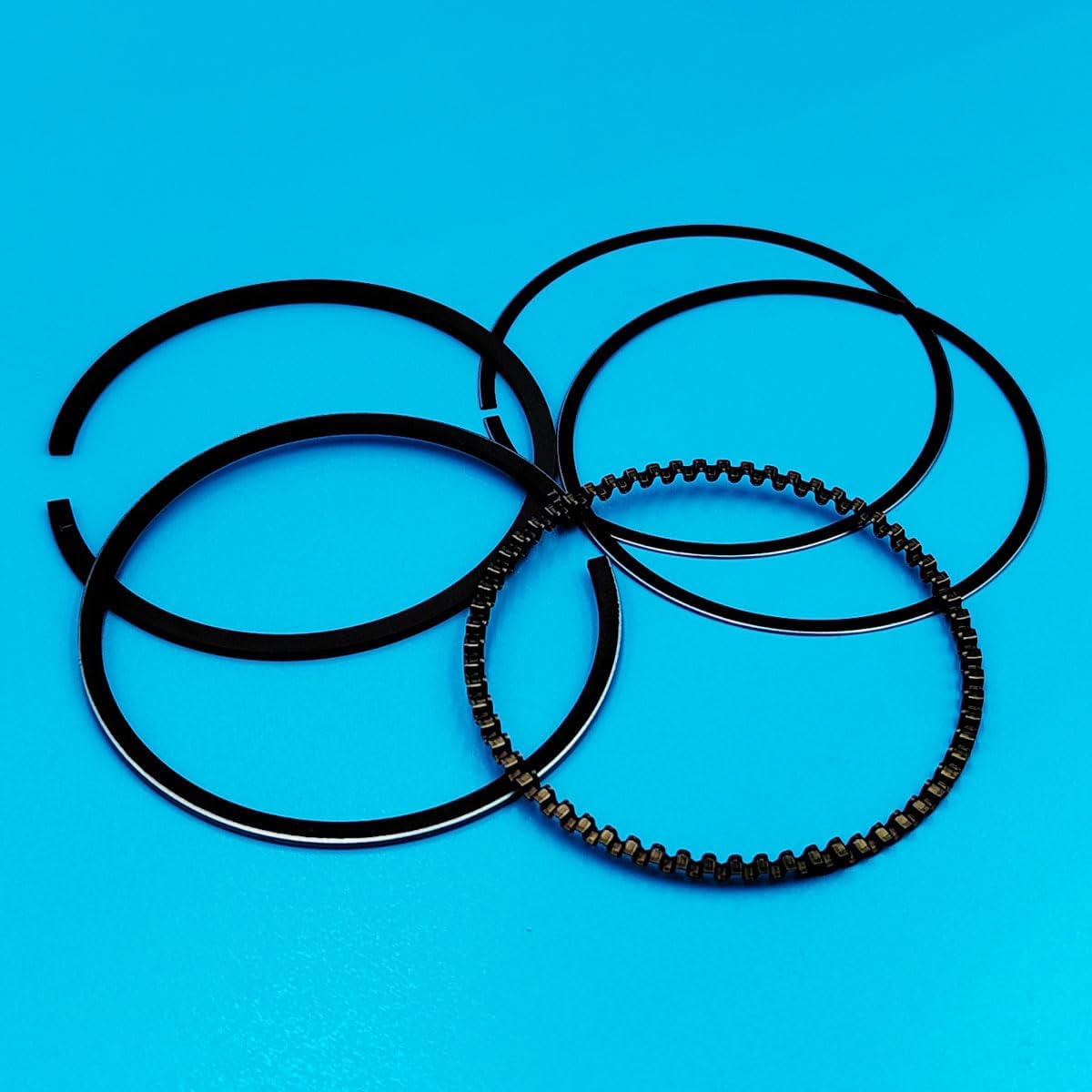
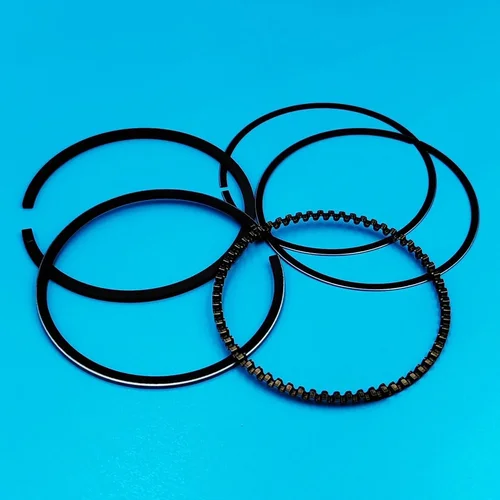
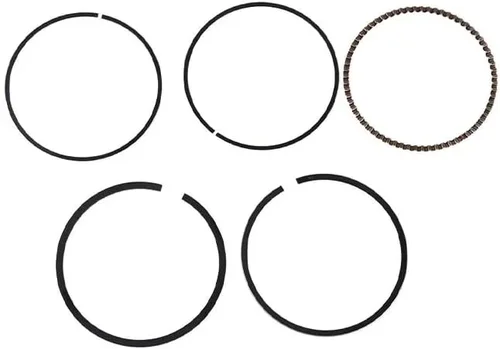
A complete GCV160 piston ring set includes three rings: two compression rings (top and second) and one oil control ring (usually a three-piece assembly with two rails and an expander). The top compression ring handles the highest pressures and temperatures, so it should be the hardest and most wear-resistant. The second ring assists with sealing and also scrapes oil. The oil control ring regulates how much oil remains on the cylinder wall—critical for preventing excessive oil consumption and smoking. Never buy a set that omits the oil control ring or uses a single-piece design unless explicitly designed for it. Verify that the ring tension matches Honda’s specs to avoid flutter or poor oil control at high RPMs.
4. Brand Reputation & Manufacturing Origin
Stick with brands known for small-engine components. Names like Vertex, JEM, Wiseco, and OEM-equivalent suppliers (e.g., those supplying to Honda under contract) consistently deliver reliable products. Be wary of generic listings with no brand name, especially if they’re shipped from overseas warehouses with vague origin details. Counterfeit rings are rampant on major e-commerce platforms—look for verified seller badges, customer photos of actual products, and detailed technical documentation. Reading through verified purchase reviews (not just star ratings) can reveal patterns of premature failure or fitment issues that specs alone won’t show.
5. Compatibility & Application-Specific Design
Not all 66mm piston rings fit the GCV160. Some are designed for other Honda engines like the GX160 or even unrelated brands. Confirm that the listing explicitly states “Fits Honda GCV160” and ideally references the OEM part number (13011-ZG8-004 for the ring set). Also consider whether your engine has been modified—performance builds may require different ring materials or tensions. If you’re unsure, consult your engine’s service manual or a trusted small-engine technician before purchasing.
6. Warranty & Return Policy
A confident manufacturer stands behind their product. Look for at least a 6-month warranty against defects in material or workmanship. Some premium brands offer 1-year coverage. More importantly, check the return window—many sellers allow only 30 days, which may not be enough time to install and test the rings under real operating conditions. Avoid vendors with “all sales final” policies unless you’re absolutely certain of compatibility. A hassle-free return process is a strong indicator of product quality and seller integrity.
7. Price vs. Value Proposition
While it’s tempting to grab the cheapest set available, remember: piston rings are a wear item that affects engine health. A $12 set might save you money upfront but could fail within 50 hours of use, costing you more in labor and downtime. Conversely, spending $60+ on over-engineered racing rings is unnecessary for a stock GCV160. The sweet spot for most users is $25–$40 for a well-made aftermarket set. Always compare cost per expected service life—not just sticker price.
8. Installation Requirements & Support
Good piston rings should come with clear installation instructions, including recommended end gap settings, orientation markings (e.g., “TOP” stamped on compression rings), and torque specs for the cylinder head. Some premium sets include a small tube of assembly lube or even a ring compressor tool. If the product lacks basic guidance, it’s a red flag. Additionally, check if the seller offers technical support—some brands have phone or email assistance for troubleshooting fitment or performance issues post-installation.
Different Types of Buying Guide
Common Buying Mistakes to Avoid
❌ Mistake: Buying Based Solely on Price
Why it’s bad: The cheapest piston rings often use inferior materials and loose manufacturing tolerances, leading to rapid wear, poor compression, and continued smoking. You’ll end up replacing them again within weeks, doubling your labor time and frustration.
What to do instead: Focus on value—not price. A mid-tier aftermarket set from a reputable brand will last 2–3 times longer than a budget option and perform closer to OEM. Calculate total cost of ownership, including potential rework.
❌ Mistake: Ignoring End Gap Specifications
Why it’s bad: Installing rings with incorrect end gaps causes catastrophic failure. Too tight, and thermal expansion seizes the ring in the bore. Too loose, and combustion gases blow past, causing low compression and oil burning.
What to do instead: Always measure and adjust end gaps using a feeler gauge before installation. Most quality sets come pre-gapped, but verify this against your engine’s service manual (typically 0.25–0.40mm for top ring).
❌ Mistake: Assuming All 66mm Rings Fit the GCV160
Why it’s bad: The GCV160 has unique ring groove widths, thicknesses, and tension requirements. Using rings from a GX160 or other 66mm engine can result in improper sealing, piston damage, or ring breakage.
What to do instead: Confirm compatibility by cross-referencing the OEM part number (13011-ZG8-004) and checking groove dimensions if rebuilding a modified engine.
❌ Mistake: Skipping the Oil Control Ring
Why it’s bad: Some sellers offer incomplete sets or substitute a two-piece oil ring for the standard three-piece design. This leads to excessive oil consumption and persistent smoking—exactly what you’re trying to fix.
What to do instead: Ensure your set includes a full three-piece oil control ring (two thin rails + expander). Verify this in product photos and descriptions.
❌ Mistake: Purchasing from Unverified Sellers
Why it’s bad: Counterfeit rings flood marketplaces like Amazon and eBay. These often lack proper heat treatment, have inconsistent hardness, and fail prematurely. Worse, they may not be returnable.
What to do instead: Buy from authorized dealers or sellers with high ratings, detailed product info, and real customer photos. Look for “ships from USA” or “sold by [Brand Name]” rather than third-party resellers.
❌ Mistake: Not Checking Return Policies Before Buying
Why it’s bad: If the rings don’t fit or perform as expected, you could be stuck with them. Some vendors offer only store credit or charge restocking fees.
What to do instead: Choose sellers with at least a 30–60 day return window and free return shipping. This gives you time to install and test under real conditions.
❌ Mistake: Overlooking Installation Best Practices
Why it’s bad: Even perfect rings can fail if installed incorrectly—wrong orientation, damaged grooves, or improper break-in procedure.
What to do instead: Follow Honda’s service manual for ring orientation (usually “TOP” facing up), use a ring compressor, and perform a proper engine break-in with varied loads for the first 5–10 hours.
Budget Guidelines: How Much Should You Spend?
– Entry-Level ($10–$25): These are typically generic, no-name rings sourced from overseas manufacturers. Expect basic cast iron construction, minimal coating, and inconsistent tolerances. Best suited for emergency repairs on rarely used equipment where longevity isn’t critical. However, be prepared for possible fitment issues and shorter service life (under 100 hours).
– Mid-Range ($25–$40): This is the sweet spot for most GCV160 owners. Brands like Vertex, JEM, and select Wiseco lines offer high-silicon cast iron rings with chrome or moly tops, precise machining, and proper heat treatment. These deliver 80–90% of OEM performance at half the cost and are ideal for homeowners and light commercial users.
– Premium ($40–$60): Includes OEM Honda genuine parts and top-tier aftermarket equivalents with advanced coatings (e.g., plasma-moly, nitriding). These provide superior wear resistance, better heat dissipation, and exact factory specs. Recommended for professionals, high-hour users, or those seeking maximum engine longevity.
– Luxury ($60+): Reserved for performance builds or specialty applications. These rings may feature forged steel, ultra-low friction coatings, or custom profiles for boosted engines. Overkill for a standard GCV160 but valuable if you’ve modified your engine for higher output.
Expert Tips for Getting the Best Deal
– Buy During Off-Season: Small-engine parts often go on sale in late fall or early winter when demand drops. Check retailers like Northern Tool, Harbor Freight, or online specialists in November–January for discounts of 15–25%.
– Bundle with Other Parts: Many sellers offer discounts when you buy piston rings alongside gaskets, valves, or carburetor kits. Since you’ll already be disassembling the engine, it’s smart to replace related wear items at the same time.
– Use Price Tracking Tools: Set alerts on Google Shopping, CamelCamelCamel (for Amazon), or Honey to notify you when your desired ring set drops in price. Prices can fluctuate by $10–$15 weekly.
– Check Local Small Engine Shops: Some local dealers carry quality aftermarket brands and may price-match online retailers. Plus, you get immediate availability and expert advice.
– Verify Seller Authenticity: On Amazon, look for “Ships from and sold by Amazon.com” or the brand’s official storefront. Avoid third-party sellers with new accounts or generic product images.
– Read the Fine Print on Warranties: Some warranties require professional installation or proof of proper break-in. Keep your receipt and installation notes in case you need to file a claim.
– Test Compression After Installation: Use a compression tester to verify that your new rings have restored proper cylinder pressure (should read 90–110 PSI on a warm GCV160). If not, recheck end gaps and ring orientation.
– Break In Properly: For the first 5 hours, avoid full-throttle operation. Vary engine speed and load to allow rings to seat correctly against the cylinder wall. This dramatically extends ring life.

Frequently Asked Questions
Q: Will new piston rings stop my GCV160 from smoking?
A: In most cases, yes—especially if the smoke is blue or gray (indicating oil burning due to worn rings). However, confirm that valve seals, the PCV system, and carburetor are functioning properly. White smoke may indicate coolant leakage (head gasket issue), which rings won’t fix.
Q: Can I reuse my old piston when installing new rings?
A: Only if the piston shows no scoring, cracks, or excessive wear in the ring grooves. Measure groove depth with a micrometer; if it’s worn beyond spec, the piston must be replaced. Most DIYers opt for a complete piston/ring assembly for peace of mind.
Q: How long do GCV160 piston rings typically last?
A: With proper maintenance, quality rings should last 300–500 hours of operation. Factors like air filter condition, oil changes, and operating environment significantly impact lifespan.
Q: Do I need special tools to install piston rings?
A: A basic ring compressor tool (under $15) is essential to avoid damaging rings during installation. You’ll also need a torque wrench for the cylinder head bolts and possibly a feeler gauge for end gap verification.
Q: Are coated rings worth the extra cost?
A: Yes, for the GCV160. Chrome or moly-coated top rings reduce scuffing during break-in and improve heat transfer. The slight premium ($5–$10) pays off in extended service life.
Q: Can I install piston rings without removing the engine from the equipment?
A: Technically yes, but it’s extremely difficult on most GCV160 applications (like pressure washers or mowers) due to limited access. Full removal is strongly recommended for proper alignment and safety.
Q: What’s the difference between a two-ring and three-ring set?
A: The GCV160 uses a three-ring configuration: two compression rings and one oil control ring. Some older engines use two rings, but never substitute a two-ring set into a three-ring engine—it will cause oil burning and poor compression.
Q: How do I know if my rings are worn?
A: Symptoms include excessive oil consumption, blue/gray smoke on startup or under load, low compression (<80 PSI), and reduced power. A leak-down test can confirm ring leakage versus valve issues.
Q: Should I replace the cylinder bore when changing rings?
A: Only if the bore is scored, tapered, or out-of-round beyond 0.05mm. Light honing is usually sufficient to refresh the surface for new rings. Severe damage requires boring and sleeving—a job for a machine shop.
Q: Are there eco-friendly or low-friction ring options?
A: Yes, some premium sets use phosphate coatings or low-friction alloys that reduce parasitic loss and improve fuel efficiency slightly. While marginal on a 5HP engine, they contribute to smoother operation and cooler running.
Our Final Recommendations
– Best for Budget-Conscious Buyers: Vertex Standard Duty Piston Ring Set ($28–$32). Offers excellent value with chrome-top compression rings, precise tolerances, and reliable performance for light-duty use. Widely available and backed by a 6-month warranty.
– Best Overall Value: JEM GCV160 Premium Ring Set ($35–$40). Features plasma-moly coated top ring, ductile iron construction, and pre-gapped ends. Consistently praised in user reviews for eliminating smoking and restoring full compression.
– Best Premium Option: Honda Genuine OEM Ring Set (13011-ZG8-004) ($55–$65). The gold standard for fit, finish, and longevity. Ideal if you’re restoring a collector’s item or need guaranteed compatibility.
– Best for Beginners: Wiseco GCV160 Rebuild Kit (includes rings, gaskets, and instructions) ($45–$55). Bundled kits simplify sourcing and often include helpful installation guides and lube. Great for first-time rebuilders.
– Best for Advanced Users: Total Seal Gapless 2nd Ring Set ($75–$90). While overkill for stock engines, these performance rings eliminate the second ring gap for near-zero blow-by—perfect for high-RPM or modified GCV160 builds.
Conclusion: Making the Right Choice
Replacing the piston rings in your Honda GCV160 is one of the most effective ways to restore lost power, eliminate smoking, and extend your engine’s life. But success hinges on choosing the right ring set—not just the cheapest or flashiest option. By prioritizing material quality, dimensional accuracy, brand reputation, and proper installation, you’ll avoid the pitfalls that plague so many DIY repairs. Remember, a well-chosen set of piston rings is an investment in reliability, not just a replacement part.
Don’t let the abundance of choices paralyze you. Focus on your specific needs: Are you fixing a weekend pressure washer or maintaining a commercial mower fleet? Your answer will guide you toward the ideal balance of cost, performance, and durability. And always remember—proper break-in and routine maintenance matter just as much as the rings themselves. With the insights from this guide, you’re now equipped to make a confident, informed decision that keeps your GCV160 running clean, strong, and smoke-free for seasons to come.
Take action today: diagnose your engine, select a quality ring set from our recommendations, and get back to work with confidence. Your equipment—and your wallet—will thank you.