
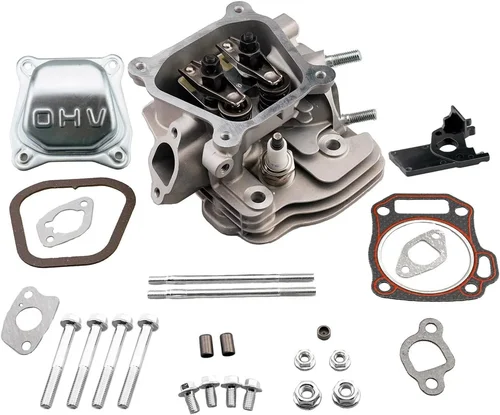
When it comes to maintaining or upgrading your Honda GCV160 engine—especially in applications where vibration control is critical, such as pressure washers, lawn mowers, or small generators—the cylinder head assembly plays a pivotal role in both performance and longevity. A high-quality cylinder head isn’t just about sealing combustion gases; it’s the heart of your engine’s efficiency, heat dissipation, and overall reliability. Whether you’re a DIY mechanic, a landscaping professional, or a homeowner tired of constant engine hiccups, choosing the right cylinder head assembly can mean the difference between smooth operation and recurring breakdowns.
This comprehensive buying guide is designed to cut through the noise and help you make an informed decision. We’ll walk you through everything you need to know—from understanding key technical specifications to comparing aftermarket options, avoiding common pitfalls, and identifying which products deliver real value for your specific use case. The market for GCV160 cylinder head assemblies has expanded significantly in recent years, with a mix of OEM replacements, budget-friendly alternatives, and performance-oriented upgrades. But not all parts are created equal. Some may save you money upfront but cost you more in repairs down the line, while others offer superior durability at a higher price point. Our goal is to equip you with the knowledge to choose wisely based on your budget, usage intensity, and long-term goals.

What to Look for When Buying Buying Guide
1. OEM vs. Aftermarket Compatibility
One of the first decisions you’ll face is whether to go with a genuine Honda OEM cylinder head assembly or an aftermarket alternative. OEM parts are engineered to exact factory specifications, ensuring perfect fitment, optimal airflow, and compatibility with your GCV160’s valve train and cooling system. They’re ideal if you prioritize reliability and don’t want to risk compatibility issues. However, they come at a premium—often 30–50% more than aftermarket options.
Aftermarket parts, on the other hand, can offer excellent value, especially from reputable manufacturers like Briggs & Stratton (via their Component Technical Services line), MowerPartsGroup, or Partzilla. The key is verifying that the part number matches your engine model (typically found on the engine shroud or carburetor). Look for assemblies labeled “direct fit” or “drop-in replacement” for the GCV160. Be cautious with ultra-cheap listings from unknown brands—they may use inferior casting techniques that lead to warping under heat or poor thread integrity in the spark plug hole.
2. Material Quality and Casting Method
The material and manufacturing process directly impact how well your cylinder head handles thermal stress and mechanical wear. Most GCV160 heads are made from aluminum alloy due to its lightweight and excellent heat conductivity. However, not all aluminum is equal. High-grade A356 or 319 aluminum alloys are commonly used in premium heads because they resist warping and maintain dimensional stability under repeated heating and cooling cycles.
Look for heads produced via permanent mold casting or low-pressure die casting rather than sand casting. Permanent mold casting produces denser, more uniform grain structures with fewer porosity defects—critical for maintaining a proper seal between the head gasket and block. Inferior sand-cast heads may develop micro-cracks over time, especially in high-vibration environments like pressure washers, leading to compression loss or coolant leaks.
Additionally, inspect the surface finish of the combustion chamber and valve seats. A smooth, machined surface ensures better flame propagation and reduces hot spots that can cause pre-ignition or detonation.
3. Valve Seat Integrity and Reconditioning Options
The valve seats in your cylinder head are subjected to extreme temperatures and mechanical stress every time the engine runs. Over time, these seats can wear down, become pitted, or lose their ability to form a tight seal with the valves—leading to compression loss, hard starting, and reduced power output.
When evaluating a replacement head, check whether the valve seats are hardened and precision-machined. Some premium aftermarket heads come with induction-hardened seats that last significantly longer than standard soft seats. If you’re considering a used or rebuilt head, ask whether the seats have been re-cut or replaced. A properly reconditioned head with new valve guides and fresh seats can perform nearly as well as a new one—but only if done by a qualified machine shop.
For users planning to run their GCV160 under heavy load (e.g., continuous pressure washing), consider heads designed with reinforced seat areas or those compatible with performance valves made from stellite or inconel for enhanced durability.
4. Gasket Compatibility and Sealing Surface Condition
A cylinder head is only as good as its seal. Even the best head will fail prematurely if paired with a low-quality head gasket or installed on a warped engine block. When purchasing a replacement assembly, ensure it includes a high-quality multi-layer steel (MLS) or composite head gasket specifically rated for the GCV160. Avoid universal or “fits many models” gaskets—they often lack the precise bore alignment and coolant passage sealing required for small engines.
Equally important is the condition of the sealing surface (the deck surface) on both the head and the engine block. Before installation, use a straightedge and feeler gauge to check for warpage. Honda specifies a maximum allowable warpage of 0.05mm (0.002 inches) for the GCV160 cylinder head. Any deviation beyond this requires resurfacing—or better yet, replacement. Never install a new head on a warped block without addressing the underlying issue, as this will almost certainly lead to gasket failure.
5. Cooling Fin Design and Heat Dissipation
In vibrating applications like pressure washers, inadequate cooling is a leading cause of premature engine failure. The GCV160 relies heavily on airflow over the cylinder head’s cooling fins to manage operating temperatures. A well-designed head maximizes surface area and fin density without restricting airflow.
Compare the fin geometry of different heads: taller, thinner fins with tighter spacing generally offer better heat transfer—but only if they’re not clogged with debris. Some aftermarket heads feature optimized fin patterns inspired by racing applications, offering up to 15% improved cooling efficiency. However, these may require modifications to shrouds or blower housings, so verify compatibility before purchasing.
Also, consider the material thickness around the spark plug well and exhaust port. Thin walls can crack under thermal cycling, especially if the engine is frequently shut down while hot. Look for heads with reinforced ribs or gussets in high-stress zones.
6. Spark Plug Thread Condition and Torque Specifications
The spark plug hole is one of the most critical—and often overlooked—areas of the cylinder head. Cross-threading during installation is a common cause of head damage, particularly in aluminum heads. Ensure the new assembly has clean, undamaged threads that match the standard 14mm x 1.25 pitch used by Honda.
When installing, always use a torque wrench set to Honda’s specification: 13–16 ft-lbs (18–22 Nm). Over-tightening can strip threads or crack the head, while under-tightening risks blow-by and overheating. Apply anti-seize compound sparingly to the spark plug threads—but never on the electrode or insulator—to prevent galling during future removals.
Some premium heads come pre-treated with corrosion-resistant coatings or include thread inserts for added protection against wear.
7. Brand Reputation and User Feedback
Not all aftermarket brands are created equal. Stick with manufacturers known for quality small-engine components. Brands like Honda Genuine Parts, Kohler (for compatible designs), and reputable distributors like Jack’s Small Engines or PartSelect consistently receive positive feedback for fit, finish, and durability.
Read verified customer reviews on platforms like Amazon, eBay, or specialty forums such as LawnSite or Pressure Washing Forum. Pay attention to comments about long-term performance, especially in high-vibration scenarios. A head that works fine in a push mower might fail quickly on a pressure washer due to resonance-induced stress.
Avoid generic “no-name” listings with stock photos and vague descriptions. Genuine sellers provide detailed specs, part numbers, and compatibility information.
8. Warranty and Return Policy
A solid warranty is a strong indicator of a manufacturer’s confidence in their product. OEM Honda parts typically come with a 1-year limited warranty, while many aftermarket suppliers offer 90-day to 6-month coverage. Some premium aftermarket brands now provide 1-year warranties, matching OEM standards.
Check the return policy before purchasing—especially if buying online. You should be able to return the item within 30 days if it doesn’t fit or arrives damaged. Avoid sellers with restocking fees or “all sales final” policies unless you’re absolutely certain of compatibility.
Different Types of Buying Guide

Common Buying Mistakes to Avoid
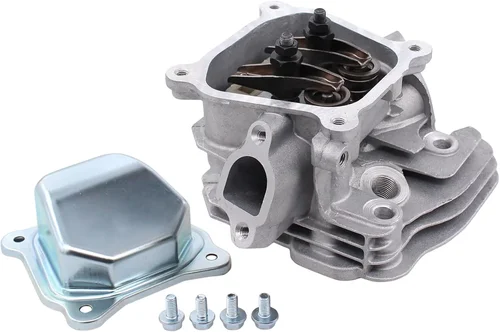
❌ Mistake: Ignoring Engine Serial Number Compatibility
Why it’s bad: The GCV160 has multiple variants (e.g., GCV160LA, GCV160LE) with slight differences in head bolt patterns, valve angles, or coolant passages. Installing an incompatible head can lead to leaks, poor performance, or complete engine failure.
What to do instead: Always verify your engine’s model and serial number (stamped on the blower housing) before ordering. Cross-check with the supplier’s compatibility list.
❌ Mistake: Choosing the Cheapest Option Without Research
Why it’s bad: Ultra-low-cost heads often use substandard aluminum, lack proper machining, or omit critical components like head gaskets. This leads to premature failure, especially in vibrating equipment where thermal cycling accelerates wear.
What to do instead: Prioritize value over absolute lowest price. A $90 head that lasts 3 years is far better than a $40 head that fails in 6 months.
❌ Mistake: Skipping Surface Preparation Before Installation
Why it’s bad: Even minor warpage or debris on the engine block deck surface will compromise the head gasket seal, causing compression loss, overheating, or coolant contamination.
What to do instead: Clean both surfaces thoroughly, check for flatness with a straightedge, and resurface if necessary. Use a quality head gasket and torque bolts in the correct sequence.
❌ Mistake: Overlooking Valve Train Components
Why it’s bad: Reusing worn valves, springs, or retainers with a new head can negate the benefits of the upgrade. Mismatched components cause noise, poor sealing, and accelerated wear.
What to do instead: Inspect and replace valve train parts as needed. Consider a complete top-end rebuild kit for optimal results.
❌ Mistake: Assuming All “GCV160” Heads Are Identical
Why it’s bad: Some aftermarket heads are designed for multiple engine families (e.g., GCV140/160/190) and may not provide optimal airflow or combustion efficiency for your specific displacement.
What to do instead: Confirm the combustion chamber volume and port dimensions match OEM specs. Look for heads specifically engineered for the GCV160.
❌ Mistake: Neglecting Torque Specifications
Why it’s bad: Aluminum heads are softer than cast iron. Incorrect torque—especially over-tightening—can strip threads, crack the head, or distort the gasket.
What to do instead: Use a calibrated torque wrench and follow Honda’s specified sequence and values. Re-torque after the first few hours of operation if recommended.
❌ Mistake: Buying Without Checking Return Policies
Why it’s bad: If the part doesn’t fit or arrives defective, you could be stuck with a non-returnable item, wasting time and money.
What to do instead: Only buy from retailers with clear return windows (30 days minimum) and free return shipping for defective items.
Budget Guidelines: How Much Should You Spend?
– Entry-Level ($30–$60): Suitable for light-duty, infrequent use (e.g., seasonal lawn mowing). Expect basic aluminum construction, minimal machining, and no included gasket. Best for temporary fixes or backup engines. Brands to consider: Generic Amazon/eBay sellers (with caution).
– Mid-Range ($70–$110): The sweet spot for most homeowners and light commercial users. These heads offer good material quality, precision casting, and often include gaskets and hardware. Ideal for pressure washers used weekly. Recommended brands: MowerPartsGroup, PartSelect, Jack’s Small Engines.
– Premium ($120–$180): For professionals or those who rely on their equipment daily. Includes OEM Honda parts or high-end aftermarket equivalents with enhanced durability, better cooling, and full warranties. Worth the investment if downtime costs you money.
– Luxury ($180+): Typically custom or performance-oriented heads with features like CNC-machined ports, ceramic coatings, or billet aluminum construction. Overkill for most GCV160 applications but may appeal to enthusiasts or racers modifying small engines.

Expert Tips for Getting the Best Deal
– Buy during off-season: Prices for small engine parts often drop in late fall and winter when demand is low. Stock up before spring mowing season begins.
– Shop authorized dealers: Retailers like Honda Power Equipment dealers, Northern Tool, or Small Engine Warehouse often run promotions and carry genuine parts with full support.
– Bundle with other repairs: If you’re already replacing the head, consider buying a complete top-end kit (includes pistons, rings, valves, gaskets). You’ll save on shipping and ensure all components are compatible.
– Check for core credit: Some suppliers offer discounts if you return your old head as a “core.” This is common with remanufactured parts.
– Read the fine print on warranties: Ensure the warranty covers defects in materials and workmanship—not just installation errors. Keep your receipt and installation records.
– Test before final assembly: Once installed, run the engine at idle for 10–15 minutes, then re-torque the head bolts. Monitor for leaks, unusual noises, or temperature spikes.
– Use OEM torque specs: Never guess. Honda’s service manual provides exact values and sequences—follow them precisely.
– Consider local machine shops: If you have a usable but worn head, a local shop may be able to recondition it for less than a new replacement.

Frequently Asked Questions
Q: Can I reuse my old head gasket with a new cylinder head?
A: No. Head gaskets are designed for single use. Reusing an old gasket will almost certainly result in leaks or compression loss. Always install a new, high-quality gasket.
Q: How do I know if my cylinder head is warped?
A: Use a precision straightedge and feeler gauge across the deck surface in multiple directions. If any gap exceeds 0.05mm (0.002 inches), the head is warped and must be resurfaced or replaced.
Q: Will an aftermarket head void my engine warranty?
A: If your engine is still under manufacturer warranty, installing a non-OEM part could void coverage—especially if the modification is deemed the cause of a failure. Check your warranty terms or consult a dealer.
Q: Do I need to adjust valve clearance after installing a new head?
A: Yes. Even with a new head, valve lash must be set according to Honda’s specifications (typically 0.15–0.20mm for intake and exhaust on the GCV160). Improper clearance causes noise and performance issues.
Q: Can I install a GCV190 head on a GCV160 block?
A: Generally no. While they share similarities, the bore size, combustion chamber volume, and porting differ significantly. Mixing components can lead to poor performance or engine damage.
Q: How often should I replace the cylinder head on a GCV160?
A: There’s no fixed interval. Replace it only when symptoms arise—loss of compression, overheating, coolant in oil, or visible damage. With proper maintenance, a quality head can last 500+ hours.
Q: Are aluminum heads prone to cracking?
A: Not if properly maintained. However, rapid cooling (e.g., spraying a hot engine with water) or overheating can cause thermal shock and cracking. Allow the engine to cool naturally after heavy use.
Q: What’s the difference between a cylinder head and a cylinder head assembly?
A: A “head” typically refers to the bare casting. An “assembly” usually includes valves, springs, retainers, and sometimes the head gasket—ready to install.
Q: Can I paint my cylinder head?
A: Yes, but use high-temperature engine enamel (rated for 500°F+). Avoid painting the combustion chamber, valve seats, or sealing surfaces. Paint can flake and cause detonation.
Q: Where can I find the official Honda part number for my GCV160 head?
A: Refer to Honda’s Parts Diagram for your specific model (e.g., GCV160LA). The OEM part number is typically 12200-Z0J-003 or similar. Verify using your serial number on Honda’s official parts site.
Our Final Recommendations
– Best for Budget-Conscious Buyers: MowerPartsGroup GCV160 Cylinder Head Assembly ($75–$85). Offers excellent value with OEM-equivalent specs, includes gasket and hardware, and ships fast.
– Best Overall Value: PartSelect PS3420301 Direct Fit Head ($89). High user ratings, precise machining, and backed by a 180-day warranty. Ideal for most residential and light commercial uses.
– Best Premium Option: Honda Genuine 12200-Z0J-003 Cylinder Head ($150–$170). Unmatched reliability, full warranty, and perfect compatibility. Choose this if you demand OEM quality.
– Best for Beginners: Jack’s Small Engines Complete Top-End Kit ($120). Includes head, valves, gaskets, and detailed instructions—great for first-time rebuilders.
– Best for Advanced Users: Custom CNC-Ported Head from Small Engine Performance ($180+). For those modifying their GCV160 for higher RPM or efficiency, with optimized airflow and cooling.
Conclusion: Making the Right Choice
Selecting the right cylinder head assembly for your Honda GCV160 isn’t just about swapping parts—it’s about ensuring your engine continues to perform reliably under demanding conditions, especially in high-vibration applications. By prioritizing compatibility, material quality, and proper installation practices, you’ll extend the life of your equipment and avoid costly downtime.
Remember: the cheapest option isn’t always the best long-term investment. Assess your usage patterns, budget constraints, and performance needs before making a decision. Whether you’re a weekend warrior or a full-time professional, there’s a cylinder head out there that’s perfect for your GCV160. Use this guide as your roadmap, follow the expert tips, and don’t rush the process. Your engine—and your wallet—will thank you.
Now that you’re equipped with the knowledge to make an informed choice, take the next step: identify your engine model, compare your top contenders, and invest in a solution that delivers both performance and peace of mind.