

When your Honda GCV160 engine starts stalling unexpectedly—especially under load or after running for a few minutes—it’s easy to assume the problem lies with the carburetor, spark plug, or fuel system. But what if the real culprit is deeper inside the engine? One often-overlooked component that can directly contribute to stalling, poor performance, and even catastrophic engine failure is the connecting rod. The connecting rod plays a vital role in transferring power from the piston to the crankshaft, and when it’s worn, bent, or improperly manufactured, it can cause misfires, excessive vibration, loss of compression, and yes—stalling.
This comprehensive buying guide is designed for homeowners, small engine technicians, and DIY repair enthusiasts who are serious about diagnosing and fixing GCV160 stalling issues at their root. Whether you’re maintaining a lawn mower, pressure washer, or generator powered by the GCV160 engine, replacing a faulty connecting rod can be the difference between a quick fix and recurring breakdowns. In this guide, we’ll walk you through everything you need to know to choose the best connecting rod for your GCV160—covering critical factors like material quality, dimensional accuracy, brand reliability, and compatibility. You’ll learn how to avoid common pitfalls, understand pricing tiers, and make an informed decision that ensures long-term engine reliability.
The market for GCV160 replacement parts is crowded with options ranging from ultra-cheap aftermarket rods to OEM-grade components and high-performance upgrades. Unfortunately, not all connecting rods are created equal. Some may fit physically but fail prematurely due to poor metallurgy or imprecise machining. Others might claim compatibility but lack the strength to handle sustained loads, leading to warping or breakage—especially in applications like commercial mowing or heavy-duty pressure washing. By the end of this guide, you’ll have a clear roadmap to identify the right connecting rod based on your budget, usage needs, and performance expectations. We’ll also share expert tips on installation, troubleshooting, and preventive maintenance to help you get the most out of your investment.
What to Look for When Buying Buying Guide
1. Material Composition & Metallurgy
The material used in a connecting rod directly impacts its strength, durability, and resistance to fatigue. For the GCV160 engine—a single-cylinder, air-cooled 4-stroke commonly used in light-duty equipment—the connecting rod must withstand repeated stress cycles without deforming or cracking. High-quality rods are typically made from forged steel or high-strength alloy steel (such as 4140 chromoly), which offers superior tensile strength compared to cast iron or low-grade mild steel often found in budget replacements.
Look for rods that specify “forged” construction rather than “cast” or “stamped.” Forged rods undergo a process where the metal is compressed under extreme pressure, aligning the grain structure for maximum strength. This is especially important if your GCV160 powers equipment used frequently or under heavy load. Avoid rods made from recycled or unspecified metals—these are more prone to internal flaws and premature failure. Additionally, some premium aftermarket rods feature heat-treated surfaces or nitride coatings for enhanced wear resistance.
2. Dimensional Accuracy & Tolerances
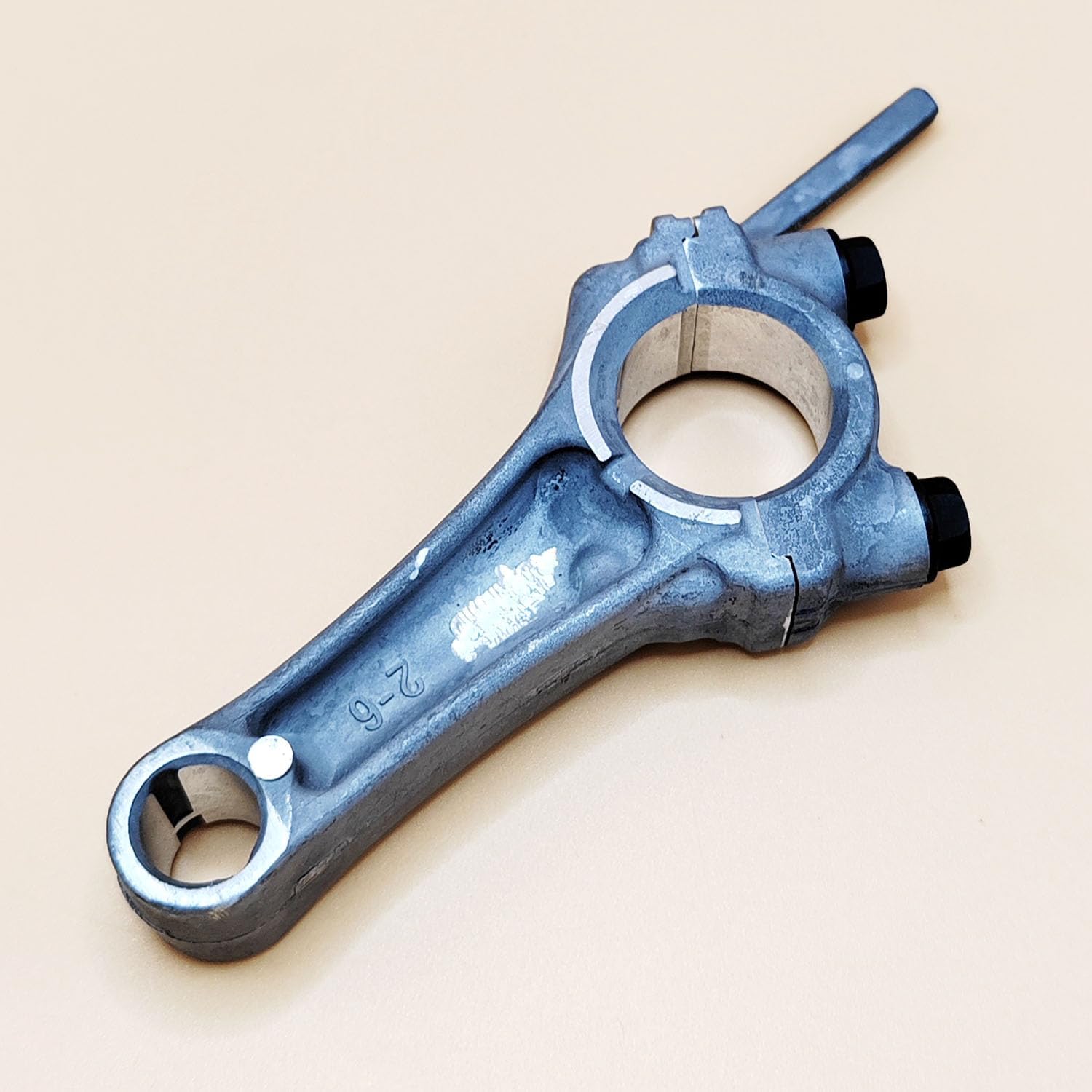
Precision matters when it comes to connecting rods. Even minor deviations in length, bore diameter, or pin alignment can lead to improper piston travel, valve interference, or crankshaft binding—all of which can cause stalling, knocking, or complete engine seizure. The GCV160 has tight manufacturing tolerances, so your replacement rod must match OEM specifications exactly.
Check the rod’s small end (piston pin) and big end (crankshaft journal) dimensions. The small end should fit snugly on the piston wrist pin without excessive play, while the big end must align perfectly with the crankshaft rod journal. Reputable manufacturers provide detailed specs, including center-to-center length (typically around 110–112mm for GCV160), rod journal width, and bolt hole spacing. Always verify these against your original rod or Honda’s service manual. Rods with sloppy tolerances may “fit” initially but will wear unevenly, leading to increased clearance, noise, and eventual stalling due to loss of compression or timing issues.
3. Compatibility & Application Suitability
Not every rod labeled “for GCV160” is truly compatible. Honda has produced multiple variants of the GCV160 over the years (e.g., GCV160A, GCV160LA), and subtle differences in crankshaft design, piston configuration, or mounting hardware can render a rod unusable. Always cross-reference part numbers—Honda’s OEM connecting rod part number is typically 13200-ZL8-000 or 13200-ZL8-010—and confirm compatibility with your specific engine model and serial number.
Also consider your application. If your GCV160 runs a residential lawn mower used once a week, a standard replacement may suffice. But if it’s powering a commercial walk-behind mower, generator, or pressure washer that sees daily use, opt for a heavy-duty or performance-oriented rod designed for extended duty cycles. Some aftermarket rods are engineered specifically for high-RPM or high-torque applications and include reinforced webbing or upgraded fasteners.
4. Brand Reputation & Manufacturing Origin
Brand matters—especially in small engine components where quality control can vary wildly. Stick with established brands known for small engine parts, such as Honda Genuine Parts, Oregon, Rotary, or reputable OEM-equivalent suppliers like Jianshe or Chongqing Rato. These companies invest in quality assurance, material testing, and precision machining.
Beware of no-name brands sold on discount marketplaces. While they may look similar, many are manufactured in facilities with minimal quality oversight and use substandard materials. Look for certifications like ISO 9001 or ASTM compliance if available. Reading user reviews from verified purchasers—particularly those who’ve installed the rod in a GCV160—can also reveal red flags like premature wear, incorrect sizing, or poor packaging that leads to damage during shipping.
5. Bolt Quality & Fastening System
The connecting rod bolts (also called cap screws) are critical to maintaining proper clamping force between the rod and cap. If these bolts stretch, loosen, or break, the rod can shift, causing catastrophic engine damage. High-quality rods come with properly hardened, precision-threaded bolts rated for the specific torque requirements of the GCV160 (usually around 16–20 ft-lbs).
Avoid rods that reuse old bolts or include generic hardware. Some premium replacements include torque-to-yield (TTY) bolts that are designed to stretch slightly under load for optimal clamping—but these must be replaced every time the rod is disassembled. Others use standard Grade 8.8 or 10.9 bolts. Always follow the manufacturer’s torque specifications and use a calibrated torque wrench during installation. Reusing stretched bolts is a common cause of rod failure and subsequent stalling.
6. Surface Finish & Machining Quality
A well-machined connecting rod will have smooth, consistent surfaces with no burrs, scratches, or uneven spots. The big end bore should be perfectly round and finished to a fine surface roughness (typically Ra 0.8 or better) to ensure proper bearing contact and oil film retention. Poor surface finish can lead to accelerated bearing wear, increased friction, and heat buildup—all contributing to performance loss and stalling.
Inspect the rod visually if possible. Look for clean machining marks, uniform chamfers, and properly deburred edges. The parting line (where the rod cap meets the body) should be tight and even. Gaps or misalignment indicate poor manufacturing. Some high-end rods undergo additional processes like shot peening or polishing to reduce stress concentrations and improve fatigue life.
7. Warranty & Return Policy
A reliable warranty is a strong indicator of a manufacturer’s confidence in their product. Most reputable brands offer at least a 1-year warranty against defects in material or workmanship. Honda Genuine Parts typically come with a 12-month/unlimited hours warranty, while some aftermarket suppliers offer 6–12 months.
Check the return policy before purchasing, especially if buying online. You want the ability to return or exchange the rod if it doesn’t fit or fails prematurely. Avoid sellers with “all sales final” policies unless they have overwhelmingly positive feedback. Also, keep your receipt and installation records—some warranties require proof of proper installation by a qualified technician.
8. Price vs. Value Proposition
While price shouldn’t be the sole deciding factor, it’s important to understand what you’re paying for. A $15 connecting rod may seem like a bargain, but if it fails after 20 hours of use, it’s not a good value. Conversely, a $60 OEM rod may last the life of the engine. Evaluate the total cost of ownership, including labor for replacement, downtime, and risk of collateral damage.
Consider the rod’s expected lifespan relative to your usage. For occasional home use, a mid-tier aftermarket rod ($25–$35) may offer the best balance. For commercial or high-stress applications, investing in a premium or OEM rod ($40–$70) is wise. Remember: a failed connecting rod can destroy the crankshaft, pistons, and cylinder—making a cheap part an expensive mistake.
Different Types of Buying Guide

Common Buying Mistakes to Avoid

❌ Mistake: Choosing Based Solely on Price
Why it’s bad: Opting for the cheapest connecting rod available often leads to premature failure, especially under load. Low-cost rods may use inferior materials, poor machining, or incorrect dimensions, resulting in stalling, vibration, or engine destruction.
What to do instead: Prioritize value over cost. Invest in a rod that matches your usage level—mid-tier aftermarket for light use, OEM or premium for heavy-duty applications. Think of it as insurance against costly repairs down the line.
❌ Mistake: Ignoring Compatibility Details
Why it’s bad: Assuming all GCV160 rods are interchangeable can lead to installation headaches or engine damage. Subtle differences in crankshaft design, piston pin size, or bolt patterns exist between model years.
What to do instead: Always verify your engine model and serial number. Cross-reference the OEM part number (13200-ZL8-000) and confirm compatibility with the seller or manufacturer before purchasing.
❌ Mistake: Reusing Old Rod Bolts
Why it’s bad: Connecting rod bolts are designed to stretch under torque. Reusing them reduces clamping force, increases the risk of cap separation, and can cause catastrophic engine failure.
What to do instead: Always replace rod bolts with new ones specified for your rod type. Use a torque wrench and follow the manufacturer’s tightening sequence and specification.
❌ Mistake: Skipping Inspection Before Installation
Why it’s bad: A damaged or defective rod can cause immediate problems. Shipping damage, manufacturing flaws, or incorrect dimensions won’t always be obvious from photos.
What to do instead: Inspect the rod upon arrival. Check for cracks, warping, incorrect dimensions, and bolt quality. Measure critical areas if possible, and compare to OEM specs.
❌ Mistake: Overlooking the Importance of Proper Break-In
Why it’s bad: Installing a new rod without a proper break-in procedure can lead to premature wear, scuffing, or seizure—especially if the engine isn’t warmed up gradually.
What to do instead: After installation, run the engine at low RPM for the first 10–15 minutes. Avoid full throttle until the engine is fully warmed. Monitor for unusual noises or vibrations.
❌ Mistake: Buying from Unverified Sellers
Why it’s bad: No-name sellers on discount platforms often sell counterfeit or low-quality parts with no warranty or support. You risk receiving a non-functional or unsafe component.
What to do instead: Purchase from authorized dealers, reputable small engine suppliers, or well-reviewed online stores with clear return policies and customer support.
❌ Mistake: Neglecting Root Cause Analysis
Why it’s bad: Replacing the connecting rod without diagnosing why it failed (e.g., oil starvation, over-revving, detonation) increases the chance of repeat failure.
What to do instead: Investigate the cause of the original failure. Check oil levels, air filter condition, and operating conditions. Address any underlying issues before installing the new rod.
Budget Guidelines: How Much Should You Spend?
- Entry-Level ($15–$25): Suitable for occasional home use on lawn mowers or light-duty equipment. Expect cast or mild steel construction with basic machining. Lifespan may be limited to 50–100 hours under normal conditions. Best for temporary fixes or low-budget repairs.
- Mid-Range ($25–$40): The sweet spot for most homeowners and light commercial users. These rods typically feature forged steel, better tolerances, and improved surface finish. Offer a good balance of cost, durability, and performance. Ideal for regular use on mowers, generators, or pressure washers.
- Premium ($40–$60): Recommended for commercial applications, high-use equipment, or those seeking long-term reliability. Includes OEM-equivalent or upgraded aftermarket rods with superior metallurgy, precision machining, and often enhanced warranties. Worth the investment for equipment used weekly or in demanding conditions.
- Luxury ($60+): Reserved for performance builds, racing applications, or restorations where authenticity and maximum durability are paramount. Includes Honda Genuine Parts or high-end chromoly rods with advanced coatings and strict quality control. Overkill for most users but essential for critical or high-stress environments.

Expert Tips for Getting the Best Deal
- Buy During Off-Season: Small engine parts often go on sale in late fall or winter when demand is low. Stock up during these periods for spring repairs.
- Use Authorized Dealers: Purchase from Honda-authorized dealers or certified small engine suppliers. They offer genuine parts, warranties, and expert support.
- Check for Bundles: Some suppliers offer connecting rod kits that include bolts, bearings, and gaskets at a discounted rate. This can save money and ensure compatibility.
- Read Verified Reviews: Focus on reviews from users who installed the rod in a GCV160. Look for comments about fit, performance, and longevity.
- Inspect Upon Delivery: Open packages carefully and inspect the rod immediately. Report any damage or defects within the return window.
- Keep Records: Save receipts, part numbers, and installation notes. This helps with warranty claims and future troubleshooting.
- Consider Local Small Engine Shops: Many local shops carry quality aftermarket parts and can provide installation advice or services. Supporting local businesses also ensures faster access to support.
- Don’t Rush the Installation: Take your time during disassembly and reassembly. Rushing can lead to cross-threading, incorrect torque, or missed damage to other components.
Frequently Asked Questions
Q: Can a bad connecting rod cause my GCV160 to stall?
A: Yes. A worn, bent, or failing connecting rod can cause loss of compression, irregular piston movement, or crankshaft binding—all of which may result in stalling, especially under load. Severe rod issues can also trigger knocking or seizing.
Q: How do I know if my connecting rod is the problem?
A: Symptoms include excessive vibration, knocking noises from the engine, loss of power, oil contamination (metal shavings), or difficulty starting. A compression test and visual inspection during disassembly can confirm rod condition.
Q: Is it worth replacing just the rod, or should I rebuild the entire engine?
A: If the rod is the only damaged component and the crankshaft, piston, and cylinder are in good condition, replacing the rod is cost-effective. However, if there’s significant wear or damage, a full rebuild may be more economical long-term.
Q: Can I install a connecting rod myself?
A: Yes, if you have basic mechanical skills, the right tools (torque wrench, feeler gauges), and a service manual. However, precision is critical—improper installation can destroy the engine. Consider professional help if unsure.
Q: Are aftermarket rods as good as OEM?
A: High-quality aftermarket rods from reputable brands can match or exceed OEM performance. However, cheap no-name rods often fall short. Stick to trusted manufacturers for reliable results.
Q: Do I need to replace the rod bolts too?
A: Yes. Rod bolts are torque-to-yield or designed for single use. Always replace them with new, manufacturer-specified bolts to ensure proper clamping force.
Q: How long should a connecting rod last?
A: Under normal conditions, a quality rod should last the life of the engine (500–1000+ hours). Premature failure is usually due to poor maintenance, oil starvation, or manufacturing defects.
Q: Can I use a rod from a different engine model?
A: Generally, no. Even small differences in dimensions or weight can affect balance and performance. Always use a rod designed specifically for the GCV160.
Q: What tools do I need to replace a connecting rod?
A: Basic tools include a socket set, torque wrench, feeler gauges, piston ring compressor, and possibly a beam-style torque wrench for accuracy. A service manual is essential for torque specs and procedures.
Q: Will a new rod improve engine performance?
A: If the old rod was worn or damaged, yes—performance, smoothness, and reliability will improve. A new rod alone won’t increase power, but it restores proper engine function.
Our Final Recommendations
- Best for Budget-Conscious Buyers: Rotary Forged Steel Connecting Rod (Part #ROT-13200) – Reliable mid-tier option with good reviews, priced around $28. Great for occasional use.
- Best Overall Value: Oregon Premium Connecting Rod (Part #OR-13200ZL8) – Forged steel, precise machining, includes new bolts. Priced at $38, it offers OEM-like performance at a lower cost.
- Best Premium Option: Honda Genuine Connecting Rod (Part #13200-ZL8-000) – The gold standard for compatibility and durability. Ideal for restorations or critical applications. $65.
- Best for Beginners: Jianshe Aftermarket Rod with Installation Guide – Comes with detailed instructions and is easy to identify. Good for first-time rebuilders. $32.
- Best for Advanced Users: Chongqing Rato Chromoly Performance Rod – Lightweight, high-strength design for modified engines or high-RPM use. $85. Requires precise installation.
Conclusion: Making the Right Choice
Choosing the right connecting rod for your GCV160 isn’t just about fixing a stalling issue—it’s about ensuring the long-term health and reliability of your engine. From material quality and dimensional precision to brand reputation and proper installation, every detail matters. While it’s tempting to go for the cheapest option, remember that a failing rod can lead to far more expensive repairs down the line.
By following the guidelines in this expert buying guide, you’ll be equipped to make a smart, informed decision that aligns with your budget, usage needs, and performance expectations. Prioritize compatibility, invest in quality when it counts, and never skip essential steps like bolt replacement and proper break-in.
Whether you’re a weekend DIYer or a seasoned technician, the right connecting rod will restore smooth operation, eliminate stalling, and give you peace of mind every time you start your engine. Take the time to choose wisely—your GCV160 will thank you with years of dependable service.