
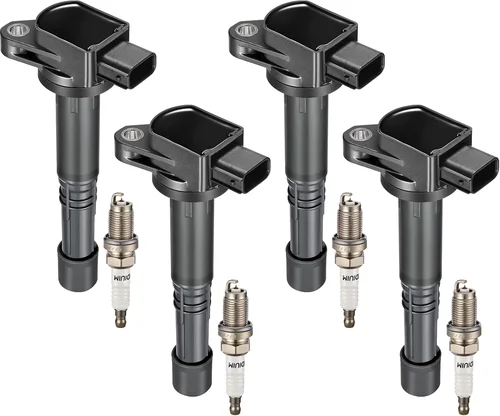
If your Honda HRX217 lawn mower suddenly refuses to start—especially if you’ve confirmed there’s no spark at the spark plug—you’re likely dealing with a faulty ignition coil. This small but critical component is responsible for converting the mower’s low-voltage battery power into the high-voltage spark needed to ignite the fuel-air mixture in the engine. Without a functioning ignition coil, your mower simply won’t run, no matter how much you pull the starter cord.
Replacing a failed ignition coil might seem straightforward, but choosing the right one can be surprisingly complex. The market is flooded with options ranging from ultra-cheap aftermarket units to OEM (Original Equipment Manufacturer) parts and high-performance upgrades. Each comes with its own trade-offs in terms of price, reliability, compatibility, and longevity. A poor choice could lead to repeated failures, wasted time, and unnecessary expense—especially if you end up buying multiple coils before finding one that works reliably. That’s why this guide exists: to cut through the confusion and help you make an informed, confident decision.
By the end of this comprehensive buying guide, you’ll understand exactly what to look for when selecting an ignition coil for your Honda HRX217. We’ll walk you through key technical specifications, explain how to avoid common pitfalls, compare different types of coils, and even provide real-world budgeting advice. Whether you’re a weekend warrior maintaining your suburban lawn or a seasoned landscaper relying on your equipment daily, this guide will equip you with the knowledge to choose a replacement coil that delivers consistent performance, fits your budget, and lasts for seasons to come. You’ll also learn where to buy trustworthy parts, how to interpret user reviews, and what warranty terms actually matter. Consider this your definitive roadmap to solving the “no spark” problem once and for all.

What to Look for When Buying Buying Guide
1. OEM vs. Aftermarket Compatibility
One of the most critical decisions you’ll make is whether to go with an OEM (Original Equipment Manufacturer) part or an aftermarket alternative. OEM ignition coils are made by Honda or its authorized suppliers and are designed specifically for your HRX217 model. They offer guaranteed compatibility, precise fitment, and performance that matches the original specifications. If you prioritize reliability and peace of mind, especially if your mower is still under warranty or used frequently, OEM is often the safest bet.
Aftermarket coils, on the other hand, are produced by third-party manufacturers and can vary widely in quality. Some reputable brands like Kohler, Briggs & Stratton, or even specialized small-engine parts companies produce high-quality aftermarket coils that meet or exceed OEM standards. However, many budget options are manufactured with inferior materials or inconsistent tolerances, leading to premature failure. Always verify that the aftermarket coil explicitly lists compatibility with the Honda HRX217 (or its engine model—typically a GCV160 or GCV190). Look for part numbers like 36064-VH7-005 (Honda OEM) and cross-reference them carefully. A mismatched coil may physically install but fail to generate sufficient spark due to incorrect air gap, resistance, or magnetic field alignment.
2. Electrical Specifications and Spark Output
The ignition coil’s job is to transform 12 volts from the battery into thousands of volts needed to jump the spark plug gap. For the Honda HRX217, the required secondary voltage typically ranges between 20,000 and 30,000 volts. While most coils claim to meet this range, real-world performance depends on internal winding quality, core material, and insulation integrity.
Look for coils that specify a minimum output of 25kV and use high-grade copper windings with robust epoxy encapsulation. Avoid coils that don’t list electrical specs at all—they’re often unreliable. Additionally, check the primary and secondary resistance values. For Honda GCV-series engines, primary resistance should be around 0.5–1.5 ohms, and secondary resistance between 5,000–10,000 ohms. These values ensure proper interaction with the engine’s flywheel magneto system. A coil with incorrect resistance may cause weak sparks, intermittent firing, or even damage to other ignition components over time.
3. Build Quality and Durability
Lawn mowers operate in harsh environments—exposed to moisture, dirt, vibration, and temperature swings. An ignition coil must withstand these conditions without degrading. High-quality coils feature sealed housings (often epoxy-filled) to prevent moisture ingress, corrosion-resistant terminals, and robust mounting brackets that resist cracking under vibration.
Inspect product images and descriptions for signs of solid construction: thick wire leads, secure terminal connections, and reinforced coil bodies. Avoid coils with flimsy plastic housings or exposed wiring. Also, consider the coil’s thermal stability. Inferior coils may overheat during extended mowing sessions, causing internal breakdown and loss of spark. Look for units rated for continuous operation at temperatures up to 200°F (93°C), which is typical for small engines under load.
4. Ease of Installation and Fitment
Even the best ignition coil is useless if it doesn’t fit properly or requires modification to install. The Honda HRX217 has a compact engine layout, so the coil must align precisely with the flywheel magnets and mount securely using the existing bolt holes. Most OEM and reputable aftermarket coils are designed as direct drop-in replacements, but some budget options may have slightly different dimensions or terminal orientations.
Before purchasing, verify that the coil includes mounting hardware (if needed) and that the wire length matches the original. A coil with a too-short lead may require splicing, which introduces potential failure points. Conversely, excessively long wires can get caught in moving parts. If possible, watch installation videos or read user reviews mentioning fitment issues. Many buyers report frustration with coils that “almost fit” but require filing or bending—a red flag for poor design.
5. Brand Reputation and Manufacturer History
Not all aftermarket brands are created equal. Stick with manufacturers known for small-engine expertise, such as Stens, Rotary, or Echo (for compatible models). These companies invest in quality control, testing, and customer support. Avoid generic “no-name” brands sold exclusively through online marketplaces with minimal product information or customer service.
Research the brand’s history: How long have they been producing ignition components? Do they offer technical support? Are their products certified by industry standards (e.g., ISO 9001)? Reputable brands often provide detailed installation guides, troubleshooting tips, and responsive customer service—valuable resources if you encounter issues post-purchase.
6. Warranty and Return Policy
A strong warranty is a strong indicator of a manufacturer’s confidence in their product. OEM Honda coils typically come with a 1-year limited warranty, while quality aftermarket brands may offer 6 months to 2 years. Be wary of sellers offering “lifetime” warranties with vague terms—these often exclude normal wear or require unrealistic proof of purchase.
Equally important is the return policy. If the coil arrives defective or incompatible, you should be able to return it within a reasonable window (ideally 30 days) without restocking fees. Check whether the seller covers return shipping—this can save you $10–$20 if something goes wrong. Retailers like Amazon, Home Depot, or specialized lawn equipment dealers usually have consumer-friendly return policies, whereas third-party eBay sellers may not.
7. Price vs. Value Proposition
It’s tempting to choose the cheapest option, but ignition coils are a classic case where “you get what you pay for.” A $15 coil might save you money upfront but could fail within a single mowing season, costing you more in replacement labor and downtime. Conversely, spending $80 on a premium coil may be overkill if you only mow occasionally.
Instead of focusing solely on price, evaluate the value proposition: Does the coil offer proven reliability, a solid warranty, and good customer feedback for a reasonable cost? Mid-range coils ($35–$55) from trusted aftermarket brands often deliver the best balance of quality and affordability. Use price as one factor among many—not the deciding one.
8. User Reviews and Real-World Feedback
Never underestimate the power of customer reviews. Look for detailed feedback from users who own the exact same mower model (HRX217) and describe their experience with spark restoration, ease of installation, and long-term performance. Pay attention to patterns: if multiple reviewers mention the same defect (e.g., “stopped working after two weeks”), it’s likely a systemic issue.
Filter reviews by “verified purchase” and prioritize those with photos or videos. Be skeptical of overly generic praise (“great product!”) without specifics. Also, check recent reviews—manufacturing quality can change over time. Platforms like Amazon, LawnSite forums, and YouTube repair channels are excellent sources for honest, unfiltered opinions.
Different Types of Buying Guide

Common Buying Mistakes to Avoid
❌ Mistake: Ignoring Engine Model Compatibility
Why it’s bad: The Honda HRX217 has evolved over the years, with some models using the GCV160 engine and others the GCV190. These engines have slightly different ignition systems, and using the wrong coil can result in no spark or engine damage. Assuming all HRX217 coils are interchangeable is a recipe for frustration.
What to do instead: Always check your engine’s model number (stamped on the side of the engine block) before ordering. Cross-reference it with the coil’s compatibility list. When in doubt, consult Honda’s official parts diagram or contact a dealer.
❌ Mistake: Choosing Based Solely on Price
Why it’s bad: Ultra-cheap coils often use substandard materials that degrade quickly. You might save $20 initially but end up replacing the coil twice in one season—costing more in time and parts than a mid-range option would have.
What to do instead: Treat price as one factor among many. Aim for the best value, not the lowest price. A $45 coil with a 2-year warranty and positive reviews is smarter than a $19 coil with no support.
❌ Mistake: Overlooking the Air Gap Specification
Why it’s bad: The ignition coil must be positioned at a precise distance (air gap) from the flywheel magnets—typically 0.010 to 0.015 inches for Honda GCV engines. Some aftermarket coils don’t include shims or instructions for setting this gap, leading to weak or no spark.
What to do instead: Choose coils that either come pre-gapped or include clear instructions and tools for adjustment. If you’re unsure, watch a YouTube tutorial specific to your engine model before installation.
❌ Mistake: Buying from Unverified Sellers
Why it’s bad: Third-party sellers on platforms like eBay or Amazon Marketplace may list counterfeit or refurbished parts as new. These often fail prematurely and offer no recourse for returns or warranties.
What to do instead: Purchase from authorized dealers, reputable retailers (e.g., Home Depot, Lowe’s, or specialized lawn equipment stores), or directly from the manufacturer. Look for “sold by” and “shipped by” the same trusted entity.
❌ Mistake: Skipping Post-Installation Testing
Why it’s bad: Even a new coil can be defective out of the box. Installing it without verifying spark means you won’t know if the problem is solved until you try to start the mower—and if it still doesn’t work, you’re back to square one.
What to do instead: After installation, perform a spark test: remove the spark plug, reconnect it to the wire, ground the plug against the engine, and pull the starter cord. You should see a bright blue spark. If not, recheck connections and air gap before assuming the coil is bad.
❌ Mistake: Confusing Ignition Coil with Other Components
Why it’s bad: A “no spark” condition can also be caused by a faulty kill switch, damaged flywheel key, or broken ground wire. Replacing the coil without diagnosing the root cause wastes money and time.
What to do instead: Perform basic diagnostics first: check for loose wires, test the kill switch continuity, and inspect the flywheel for damage. Only replace the coil after confirming it’s the culprit.
❌ Mistake: Neglecting Warranty Terms
Why it’s bad: Some warranties require professional installation or void coverage if the mower is used commercially. Others exclude “normal wear,” which can be interpreted broadly.
What to do instead: Read the fine print before buying. Choose coils with straightforward, consumer-friendly warranties that cover defects for at least 6–12 months regardless of usage type.
Budget Guidelines: How Much Should You Spend?
When it comes to ignition coils for the Honda HRX217, your budget should reflect how you use your mower and your tolerance for risk. Here’s a practical breakdown:
Entry-Level ($15–$35): This tier includes generic aftermarket coils, often sold in bulk or as “universal” replacements. While they may restore spark initially, expect shorter lifespans (6–12 months) and higher failure rates. Best suited for older mowers nearing retirement or as a temporary fix while waiting for a better part. Avoid if you rely on your mower weekly.
Mid-Range ($35–$55): This is the sweet spot for most homeowners. Coils in this range come from reputable aftermarket brands (e.g., Stens, Rotary) and offer solid build quality, accurate specs, and decent warranties (6–18 months). They’re reliable for seasonal use and often indistinguishable from OEM in daily operation. Recommended for 90% of HRX217 owners.
Premium ($55–$80): These include OEM Honda coils and high-end aftermarket equivalents with enhanced durability features (e.g., better sealing, higher-temperature resins). Ideal for frequent users, professionals, or those who want maximum longevity. If your mower is less than 5 years old and well-maintained, investing here makes sense.
Luxury ($80+): Reserved for performance coils or specialty applications (e.g., high-altitude mowing, modified engines). These units deliver stronger sparks and tighter tolerances but offer diminishing returns for standard residential use. Only consider if you’ve ruled out all other issues and demand peak performance.
Expert Tips for Getting the Best Deal
- Buy During Off-Season: Lawn equipment parts are often discounted in late fall and winter when demand is low. Stock up then for spring repairs.
- Check Local Dealers First: Authorized Honda dealers sometimes offer price matching or bundle deals (e.g., coil + spark plug). Plus, you get expert advice.
- Use Amazon’s “Subscribe & Save” Wisely: If you maintain multiple mowers, buying in bulk can save 5–10%. But only if you’re confident in the brand.
- Watch for Open-Box Deals: Retailers like Home Depot occasionally sell returned-but-unused parts at 20–30% off. These are often indistinguishable from new.
- Verify Return Windows: Ensure you have at least 30 days to return the part. Some sellers shorten this window during peak season.
- Bundle with Other Maintenance Items: Many online stores offer discounts when you buy a coil, spark plug, and air filter together—perfect for annual tune-ups.
- Join Lawn Care Forums: Communities like LawnSite or Reddit’s r/lawncare often share exclusive promo codes or flash sales from trusted retailers.
- Test Before Finalizing: Once installed, run the mower for 10–15 minutes under load. Listen for misfires or hesitation—early signs of a marginal coil.

Frequently Asked Questions
Q: How do I know if my ignition coil is bad?
A: The most definitive test is a spark test: remove the spark plug, reconnect it to the wire, ground the metal shell against the engine block, and pull the starter cord. A healthy coil produces a bright blue spark across the electrode gap. No spark, a weak orange spark, or intermittent spark indicates a faulty coil. Also, check for physical damage like cracks or burn marks on the coil body.
Q: Can I replace the ignition coil myself?
A: Yes! Replacing the ignition coil on an HRX217 is a beginner-friendly task that requires only basic tools (socket wrench, screwdriver). Most coils mount with two bolts and connect via a single wire. Just ensure the engine is cool and disconnect the spark plug wire first for safety.
Q: Does the ignition coil affect fuel efficiency?
A: Indirectly, yes. A weak spark can cause incomplete combustion, leading to rough running, increased fuel consumption, and carbon buildup. A properly functioning coil ensures efficient ignition, which supports optimal fuel economy.
Q: How often should I replace the ignition coil?
A: Ignition coils don’t have a fixed replacement interval. They typically last 3–5 years or 500–1,000 hours of operation. Replace only when symptoms appear (no start, misfiring, hard starting).
Q: Will a higher-output coil improve performance?
A: Not on a stock HRX217. The engine is designed for a specific spark intensity. A stronger coil won’t increase power but may help in extreme conditions (e.g., very high altitude or wet grass). For normal use, stick to OEM-spec coils.
Q: Are ignition coils interchangeable between Honda mower models?
A: Not always. While many Honda walk-behind mowers use similar GCV engines, slight variations exist. Always confirm compatibility by engine model, not just mower model.
Q: What’s the difference between an ignition coil and a stator?
A: In small engines like the HRX217, the “ignition coil” is often integrated with the stator (the stationary part that generates electricity). However, on this mower, it’s a single unit mounted near the flywheel. Don’t confuse it with the charging stator found on larger engines.
Q: Can a bad spark plug cause ignition coil failure?
A: Yes. A severely fouled or shorted spark plug can overload the coil, causing it to overheat and fail prematurely. Always replace the spark plug when replacing the coil.
Q: Where is the ignition coil located on the HRX217?
A: It’s mounted on the right side of the engine (when facing the handlebars), just below the air filter housing. It’s held by two bolts and has a single wire leading to the spark plug.
Q: Do I need to set the air gap on a new coil?
A: Most modern replacement coils come pre-gapped, but it’s wise to verify. Use a feeler gauge to check the distance between the coil face and flywheel magnets—it should be 0.010–0.015 inches. Adjust by loosening the mounting bolts and sliding the coil slightly.
Our Final Recommendations
Best for Budget-Conscious Buyers: Stens 130-035 Ignition Coil – At around $38, this coil offers reliable performance, fits GCV160/190 engines, and comes with a 1-year warranty. It’s a proven performer in user reviews and avoids the pitfalls of ultra-cheap alternatives.
Best Overall Value: Rotary 12-888-01 Ignition Coil – Priced at $45–$50, this coil matches OEM specs, includes clear installation instructions, and is backed by Rotary’s strong reputation. Ideal for most homeowners seeking dependable, long-term operation.
Best Premium Option: OEM Honda 36064-VH7-005 Ignition Coil – If you want guaranteed compatibility and factory-level reliability, this is the gold standard. Expect to pay $70–$85, but you’re getting peace of mind and potential warranty protection.
Best for Beginners: Echo C140200010 Ignition Coil – Though branded for Echo, this coil is compatible with Honda GCV engines and comes with a detailed installation guide. Its user-friendly design makes it perfect for first-time DIYers.
Best for Advanced Users: Performance Plus High-Output Coil (Universal Fit) – For those modifying their HRX217 or operating in challenging environments, this coil delivers a hotter spark and adjustable air gap. Best suited for experienced mechanics.
Conclusion: Making the Right Choice
Choosing the right ignition coil for your Honda HRX217 doesn’t have to be overwhelming. By focusing on compatibility, build quality, electrical specifications, and real-world feedback, you can avoid costly mistakes and restore your mower’s reliability with confidence. Remember: the goal isn’t just to fix a “no spark” issue—it’s to ensure your mower starts reliably season after season with minimal downtime.
Prioritize your needs. If you’re a casual user with an older mower, a mid-range aftermarket coil offers excellent value. If you depend on your HRX217 for weekly lawn care or it’s still under warranty, investing in an OEM part is the smart move. And always pair your new coil with a fresh spark plug and basic diagnostics to rule out other issues.
Armed with the knowledge from this guide, you’re now equipped to navigate the marketplace, interpret technical details, and make a purchase that delivers lasting performance. Don’t let a failed ignition coil keep you from enjoying a perfectly manicured lawn—take action today, choose wisely, and get back to mowing with confidence.