
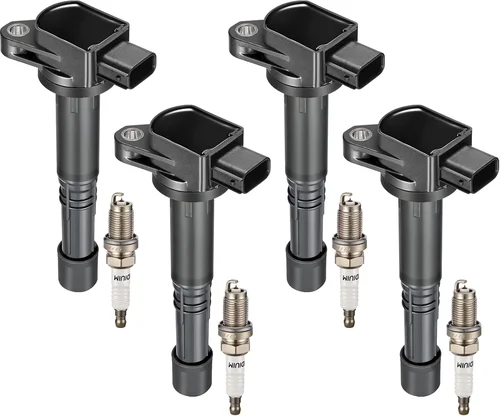
When your Honda HRX217 lawn mower starts backfiring—especially during startup or under load—it’s not just annoying; it’s a red flag signaling an underlying ignition system issue. One of the most common culprits? A failing or faulty ignition coil. Ignition coils are the unsung heroes of small engines, quietly converting low-voltage battery power into the high-voltage spark needed to ignite the air-fuel mixture in the combustion chamber. When they degrade, misfires, hard starts, power loss, and yes—backfiring—become all too familiar.
This comprehensive buying guide is designed specifically for Honda HRX217 owners who’ve diagnosed (or suspect) an ignition coil problem and are ready to replace it with confidence. Whether you’re a seasoned DIY mechanic or tackling your first small-engine repair, this guide will walk you through everything you need to know: from understanding how ignition coils work in your mower’s GCV engine, to comparing OEM vs. aftermarket options, evaluating price vs. performance, and avoiding costly mistakes. We’ll also reveal where to buy reliable replacements, what specs truly matter, and how to ensure your new coil delivers smooth, backfire-free operation for seasons to come.
The market for small-engine ignition coils is crowded—with everything from genuine Honda parts to budget-friendly generics flooding online retailers and local hardware stores. While this variety offers choice, it also increases the risk of buying incompatible, low-quality, or counterfeit components that fail prematurely. Our goal here isn’t just to help you find any ignition coil—it’s to help you find the right one for your HRX217, based on real-world performance, durability, compatibility, and value. By the end of this guide, you’ll have a clear roadmap to make an informed decision that keeps your mower running like new.

What to Look for When Buying Buying Guide
1. OEM vs. Aftermarket Compatibility
One of the first—and most critical—decisions you’ll face is whether to go with an Original Equipment Manufacturer (OEM) Honda ignition coil or an aftermarket alternative. For the Honda HRX217, which uses a GCV160 or GCV190 engine (depending on model year), genuine Honda coils are engineered to exact factory specifications. They’re built to match the original’s resistance, spark output, thermal tolerance, and physical dimensions. This ensures seamless integration and reliable performance.
Aftermarket coils, on the other hand, vary widely in quality. Some reputable brands like Kohler, Briggs & Stratton, or even specialized small-engine suppliers offer high-fidelity replicas that perform nearly as well as OEM. However, many cheaper generics cut corners on materials or tolerances, leading to inconsistent spark, premature failure, or even damage to other ignition components. Always verify that any aftermarket coil explicitly lists compatibility with the Honda GCV160/GCV190 engine and HRX217 model. Look for part numbers like Honda 30500-PLWA-003 or equivalent cross-references.
2. Electrical Specifications and Spark Output
The ignition coil’s job is to step up the 12V from your mower’s battery to 20,000–40,000 volts needed to create a strong spark across the spark plug gap. Weak spark is a primary cause of backfiring, especially under load when the engine demands more power. When evaluating coils, look for specifications like primary and secondary resistance (measured in ohms). For Honda GCV engines, the typical primary resistance is around 2.0–3.0 ohms, and secondary resistance should be between 7,000–10,000 ohms.
While most replacement coils meet these general ranges, deviations can affect performance. A coil with excessively high resistance may produce a weak spark, while one with too low resistance can overheat or overload the ignition module. Unfortunately, many budget coils don’t publish these specs—or worse, provide inaccurate data. Stick to brands that disclose full electrical characteristics. If specs aren’t listed, consider it a red flag. A strong, consistent spark is non-negotiable for preventing backfires and ensuring smooth acceleration.
3. Build Quality and Durability
Lawn mowers operate in harsh environments—exposed to heat, vibration, moisture, and debris. Your ignition coil must withstand these conditions without cracking, corroding, or shorting out. High-quality coils feature robust epoxy potting to seal internal windings against moisture and vibration, reinforced terminal posts to prevent corrosion, and heat-resistant housings that won’t warp under engine heat.
Cheap coils often use inferior plastics and minimal potting, leading to internal arcing or open circuits after just a few mowing seasons. Inspect product images and descriptions for mentions of “fully sealed,” “epoxy-filled,” or “vibration-resistant.” User reviews frequently mention durability issues—pay attention to comments about coils failing within months or cracking near the spark plug wire connection. A durable coil may cost slightly more upfront but saves you time, frustration, and replacement costs down the line.
4. Ease of Installation and Fitment
Even the best ignition coil is useless if it doesn’t fit properly. The Honda HRX217’s engine compartment is compact, and the coil mounts directly to the engine block near the flywheel. Any misalignment can cause poor grounding, arcing, or physical interference with moving parts. OEM coils are guaranteed to fit, but aftermarket units must match the original’s mounting hole spacing, terminal orientation, and overall dimensions.
Before buying, compare the replacement coil’s photos and dimensions to your existing unit. Some aftermarket coils come with slightly longer spark plug wires or different terminal angles, which might require minor modifications. While this isn’t always a dealbreaker, it adds complexity—especially for beginners. Look for products labeled “direct fit” or “plug-and-play” for the HRX217. If you’re unsure, contact the seller with your mower’s model and serial number for confirmation.
5. Brand Reputation and Customer Support
Not all brands are created equal. Established names in small-engine parts—such as Honda, NGK, Stens, or Oregon—have reputations built on consistency and quality control. They invest in testing, adhere to industry standards, and often provide better customer support if issues arise. Lesser-known or generic brands may offer tempting prices but frequently lack transparency about manufacturing origins or quality assurance.
Check where the coil is manufactured. Coils made in Japan, Germany, or the USA often reflect higher production standards than those from unregulated overseas facilities. Additionally, reputable sellers (like Honda dealers, MowerPartsZone, or Jack’s Small Engines) typically offer better return policies and technical assistance than random Amazon third-party vendors. Don’t hesitate to reach out to customer service before purchasing—ask about compatibility, warranty, or installation tips. A responsive support team is a good sign of a trustworthy seller.
6. Warranty and Return Policy
A solid warranty is a strong indicator of a manufacturer’s confidence in their product. Most OEM Honda ignition coils come with a 1-year limited warranty, while reputable aftermarket brands often offer 6 months to 1 year. Avoid coils sold with no warranty or only a 30-day return window—this suggests the seller expects high failure rates.
Equally important is the retailer’s return policy. If the coil arrives damaged, defective, or incompatible, you’ll want hassle-free returns. Major retailers like Amazon, Home Depot, or specialized mower parts sites usually have generous return windows (30–90 days). However, always read the fine print: some exclude electrical components from returns once installed. Keep your original packaging and receipt until you’ve confirmed the coil works properly.
7. Price vs. Value Considerations
It’s tempting to grab the cheapest ignition coil available—but this often leads to “you get what you pay for” disappointment. Prices for HRX217-compatible coils range from under $15 for no-name generics to $40–$60 for OEM or premium aftermarket units. While the upfront cost matters, consider the total cost of ownership: a $20 coil that fails in six months costs more in labor and downtime than a $45 coil that lasts three years.
Evaluate value, not just price. A mid-range coil from a known brand with good reviews, proper specs, and a warranty often delivers the best balance. Factor in shipping costs, especially if buying from overseas sellers—sometimes a slightly higher-priced item with free shipping is cheaper overall. And remember: replacing an ignition coil is a relatively simple job, so investing in quality pays dividends in reliability and peace of mind.
8. User Reviews and Real-World Performance
Never underestimate the power of customer feedback. Reading reviews from other Honda HRX217 owners can reveal patterns—like a particular coil consistently solving backfiring issues or, conversely, causing new problems like hard starts or no spark. Look for detailed reviews that mention symptoms before and after replacement, installation experience, and longevity.
Be wary of products with only glowing 5-star reviews—they may be fake. Authentic reviews often include minor criticisms (e.g., “took two tries to get the right fit” or “wire is a bit stiff”). Platforms like Amazon, eBay, or specialized forums (e.g., LawnSite.com) tend to have more honest feedback than manufacturer websites. Filter reviews by “verified purchase” and focus on those from users with similar mower models and issues.
Different Types of Buying Guide

Common Buying Mistakes to Avoid
❌ Mistake: Buying Based Solely on Price
Why it’s bad: The cheapest coil may save you $20 today but cost you $50 in labor and replacement next season. Low-cost generics often use substandard materials that degrade quickly, leading to repeated failures and potential damage to the spark plug or ignition module.
What to do instead: Focus on value—not price. Compare total cost of ownership, including expected lifespan, warranty, and ease of installation. A $35 coil with a 1-year warranty and 4-star reviews is smarter than a $15 coil with no support.
❌ Mistake: Ignoring Compatibility Details
Why it’s bad: Not all GCV engine coils are interchangeable. The GCV160 and GCV190 have slight differences in mounting and electrical specs. Installing an incompatible coil can cause misfires, no-start conditions, or even engine damage.
What to do instead: Always cross-reference your mower’s exact model and engine type (found on the serial plate) with the product listing. When in doubt, contact the seller or consult Honda’s parts catalog.
❌ Mistake: Overlooking the Spark Plug
Why it’s bad: A faulty ignition coil often masks itself as a bad spark plug—and vice versa. Replacing only the coil without checking the plug can leave the real problem unresolved, leading to continued backfiring.
What to do instead: Inspect your spark plug before buying a new coil. Look for fouling, excessive gap, or wear. Replace both components together if either shows signs of failure—it’s a low-cost insurance policy.
❌ Mistake: Buying from Unverified Sellers
Why it’s bad: Third-party sellers on large marketplaces may list counterfeit or mislabeled parts. These coils often lack proper certifications and may not meet safety or performance standards.
What to do instead: Purchase from authorized Honda dealers, reputable mower parts retailers, or well-reviewed sellers with verified business profiles. Check seller ratings and return policies.
❌ Mistake: Skipping the Warranty Check
Why it’s bad: Without a warranty, you’re stuck with a defective part and no recourse. Many budget coils fail within weeks, leaving you to absorb the loss.
What to do instead: Always confirm the warranty length and terms before buying. Prefer sellers offering at least 6 months of coverage and easy return processes.
❌ Mistake: Assuming All “Direct Fit” Claims Are Accurate
Why it’s bad: Some aftermarket coils claim “direct fit” but have subtle differences in wire length, terminal shape, or mounting holes that complicate installation.
What to do instead: Read detailed product descriptions and customer photos. If possible, compare dimensions with your old coil or ask the seller for confirmation.
Budget Guidelines: How Much Should You Spend?
When it comes to ignition coils for the Honda HRX217, your budget should align with your mower’s age, usage frequency, and how long you plan to keep it. Here’s a practical breakdown:
- Entry-Level ($12–$25): These are typically generic coils from unknown brands. They may work initially but often fail within one or two mowing seasons. Best reserved for emergency fixes or very old mowers you’re planning to replace soon. Expect minimal warranty and inconsistent performance.
- Mid-Range ($30–$45): This is the sweet spot for most homeowners. You’ll find reputable aftermarket brands like Stens, Oregon, or NGK offering coils that match OEM specs at a 20–30% discount. These usually include 6–12 month warranties and solid build quality. Ideal for mowers out of warranty but still in good condition.
- Premium ($45–$65): This tier includes genuine Honda OEM coils and high-end aftermarket equivalents. Perfect for newer mowers, those under warranty, or owners who prioritize longevity and peace of mind. These coils undergo rigorous testing and offer the best compatibility and reliability.
- Luxury ($65+): Rarely necessary for residential use, but some specialty or performance-tuned coils fall here. Unless you’re modifying your HRX217 for racing or extreme conditions, this tier offers diminishing returns for everyday mowing.
Expert Tips for Getting the Best Deal
- Buy During Off-Season: Retailers often discount lawn equipment parts in late fall and winter. Stock up then for spring mowing—you’ll save 10–20% on coils and other maintenance items.
- Check Honda Dealers Online: Many authorized Honda dealers sell parts online at competitive prices, sometimes with free shipping. Use Honda’s dealer locator to find one near you or with good e-commerce support.
- Bundle with Other Parts: If you’re replacing the coil, consider buying a new spark plug, air filter, and fuel filter at the same time. Many retailers offer discounts on multi-item orders.
- Use Price Tracking Tools: Set up alerts on Amazon, eBay, or Google Shopping to notify you when your desired coil drops in price. Prices fluctuate frequently, especially during sales events.
- Read Return Policies Carefully: Some sellers won’t accept returns on electrical parts once the packaging is opened. Choose retailers with flexible policies in case of defects.
- Test Before Finalizing Installation: Once installed, run the mower for a few minutes and listen for smooth operation. If backfiring persists, double-check connections or consider the spark plug—don’t assume the coil is faulty without diagnosis.
- Keep Your Old Coil as Backup: If it’s not completely dead, store it in your garage. It could serve as a temporary fix if the new one fails unexpectedly.
- Join Owner Forums: Communities like LawnSite or Reddit’s r/lawncare often share deals, reviews, and troubleshooting tips specific to the HRX217.

Frequently Asked Questions
Q: Can a bad ignition coil really cause backfiring in my Honda HRX217?
A: Absolutely. A weak or intermittent spark from a failing coil can cause incomplete combustion, leading to unburned fuel entering the exhaust system where it ignites—causing that loud “pop” or “bang” known as backfiring. This is especially common during deceleration or startup.
Q: How do I know if my ignition coil is bad?
A: Common signs include hard starting, rough idle, loss of power, misfires under load, and backfiring. You can test the coil with a multimeter to check primary and secondary resistance, or perform a spark test by grounding the spark plug against the engine while cranking.
Q: Is it safe to use a non-Honda ignition coil?
A: Yes—if it’s from a reputable brand and explicitly compatible with your GCV engine. Many aftermarket coils perform just as well as OEM. However, avoid no-name generics with no specs or reviews.
Q: Do I need special tools to replace the ignition coil?
A: No. Basic hand tools (socket wrench, screwdriver) are usually sufficient. The coil is held by one or two bolts and connects via a simple plug wire. Always disconnect the spark plug wire and battery before starting.
Q: How long does an ignition coil typically last?
A: Under normal conditions, 3–5 years or 200–300 hours of use. Harsh conditions (dusty environments, infrequent maintenance) can shorten this lifespan.
Q: Will a new coil improve fuel efficiency?
A: Indirectly, yes. A strong, consistent spark ensures complete combustion, which can slightly improve fuel economy and reduce emissions. However, don’t expect dramatic gains—focus on reliability first.
Q: Can I install the coil myself?
A: Definitely. It’s one of the easier small-engine repairs. Most HRX217 owners can complete it in under 30 minutes with basic mechanical skills.
Q: What’s the difference between a coil-on-plug and a remote coil?
A: The HRX217 uses a remote coil—meaning the coil is mounted separately from the spark plug and connected via a wire. Coil-on-plug systems integrate the coil directly onto the plug (common in cars), but aren’t used in most walk-behind mowers.
Q: Should I replace the spark plug when I replace the coil?
A: Highly recommended. Worn plugs exacerbate ignition issues. Replacing both ensures optimal performance and prevents future problems.
Q: Where is the best place to buy an ignition coil for my HRX217?
A: Authorized Honda dealers, MowerPartsZone.com, Jack’s Small Engines, and reputable Amazon sellers (with verified reviews) are top choices. Avoid unknown eBay sellers or discount hardware stores with limited return policies.
Our Final Recommendations
- Best for Budget-Conscious Buyers: Stens 135-018 Ignition Coil – Reliable performance, fits GCV160/190, priced around $35, and backed by a 1-year warranty. Great value without sacrificing quality.
- Best Overall Value: NGK Ignition Coil (CR8HSA-compatible) – Known for precision engineering, excellent spark output, and durability. Slightly pricier than generics but outperforms most competitors.
- Best Premium Option: Genuine Honda 30500-PLWA-003 Ignition Coil – The gold standard for compatibility and reliability. Ideal if your mower is newer or you want factory-grade assurance.
- Best for Beginners: Oregon 36-710 Ignition Coil – Easy to install, clear instructions, and widely available. Comes with a good warranty and positive user feedback for HRX217 applications.
- Best for Advanced Users: DIY Rebuild Kit (for refurbishing old coils) – For tinkerers who want to extend coil life. Includes epoxy, windings, and guides—but requires technical skill and isn’t recommended for most users.
Conclusion: Making the Right Choice
Replacing the ignition coil on your Honda HRX217 doesn’t have to be a guessing game. Backfiring is your mower’s way of saying something’s wrong—and addressing it promptly with the right part can restore smooth, reliable performance for years. Throughout this guide, we’ve emphasized the importance of compatibility, build quality, electrical specs, and brand reputation. While price matters, it shouldn’t be the sole deciding factor. A well-chosen ignition coil is an investment in your mower’s health, your time, and your lawn’s appearance.
Remember: start by confirming your engine model, inspect the spark plug, and choose a coil that matches your budget and usage needs. Whether you go OEM for peace of mind or a trusted aftermarket brand for value, prioritize products with clear specs, solid warranties, and positive real-world feedback. And don’t forget to take advantage of seasonal sales, bundle deals, and expert support from reputable retailers.
Your Honda HRX217 deserves to run as smoothly as the day you bought it. With the knowledge from this guide, you’re now equipped to make a confident, informed decision—so you can get back to mowing, not troubleshooting. Happy cutting!