
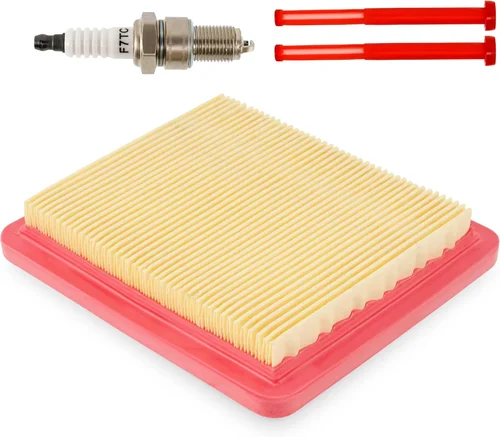
When your Honda HRX217 lawn mower suddenly won’t start and you’ve ruled out spark plug or ignition issues, the culprit is often fuel-related—specifically, a clogged or failing fuel filter. The fuel filter plays a silent but critical role in your mower’s performance, ensuring clean gasoline flows smoothly to the engine while blocking dirt, debris, and water that could cause damage or prevent combustion. A malfunctioning filter can lead to poor acceleration, stalling, hard starts, or even a complete no-start condition—especially when there’s no spark due to insufficient fuel delivery. That’s why knowing where to buy the right fuel filter for your Honda HRX217 isn’t just about convenience; it’s about restoring reliability, extending engine life, and avoiding costly repairs down the line.
This comprehensive buying guide is designed to arm you with everything you need to make an informed, confident decision when purchasing a replacement fuel filter for your Honda HRX217. Whether you’re a weekend gardener, a landscaping professional, or a DIY enthusiast, you’ll learn how to identify high-quality filters, avoid common pitfalls, compare top brands, understand pricing tiers, and find the best deals from trusted retailers. We’ll walk you through technical specifications, compatibility concerns, installation tips, and long-term maintenance strategies—all tailored specifically to the HRX217 model. By the end of this guide, you won’t just know where to buy—you’ll know exactly what to buy and why it matters.
The market for small engine parts like fuel filters may seem straightforward, but it’s surprisingly fragmented. You’ll find OEM (Original Equipment Manufacturer) parts directly from Honda, third-party equivalents from brands like Briggs & Stratton, Kohler, or Stens, and generic options sold on major e-commerce platforms. Each comes with trade-offs in price, quality, availability, and warranty. Some sellers specialize in lawn equipment parts, while others offer broader automotive or industrial components that may not be optimized for small engines. With so many choices—and misinformation online—it’s easy to overspend on unnecessary features or underspend on subpar parts that fail prematurely. This guide cuts through the noise, giving you expert-level insight grounded in real-world experience and technical accuracy.

What to Look for When Buying a Fuel Filter for Your Honda HRX217
1. Compatibility with Honda HRX217 Model
The most fundamental factor when buying a fuel filter is ensuring it’s compatible with your specific mower model—in this case, the Honda HRX217. While many small engines use similar-sized filters, subtle differences in inlet/outlet diameter, thread type, or mounting orientation can render a part useless or even damaging if installed incorrectly. The HRX217 typically uses a small in-line fuel filter (often around 1/4″ or 5/16″ hose barb size), located between the fuel tank and carburetor. Always cross-reference your mower’s serial number and engine model (usually GCV190 or GCV200 for HRX217) with the manufacturer’s specifications. Honda’s official parts diagrams (available online or through dealers) list the exact OEM part number—commonly 16952-Z0J-003 or equivalent—which should be your baseline for comparison.
2. OEM vs. Aftermarket: Quality and Reliability
You’ll face a key decision: buy genuine Honda OEM parts or opt for aftermarket alternatives. OEM filters are manufactured to Honda’s exacting standards, guaranteeing perfect fit, material durability, and filtration efficiency. They’re ideal if you prioritize long-term reliability and don’t mind paying a premium. Aftermarket filters, on the other hand, can offer significant cost savings—sometimes 30–50% less—and many reputable brands (like Stens, Oregon, or Rotary) produce high-quality equivalents that meet or exceed OEM specs. However, beware of ultra-cheap generics from unknown sellers; these often use inferior filter media that clogs quickly or degrades in ethanol-blended fuels. Always check for certifications like ISO 9001 or compliance with SAE J905 standards for small engine fuel systems.
3. Filtration Efficiency and Media Type
Not all fuel filters are created equal when it comes to what they actually filter out. The HRX217’s engine is sensitive to contaminants, especially since modern gasoline often contains up to 10% ethanol, which attracts moisture and promotes corrosion. Look for filters with multi-layer filtration media—typically a combination of synthetic mesh, cellulose, or polyester—that can capture particles as small as 10–20 microns. Some advanced filters also include water-separating elements or anti-corrosion coatings. Avoid paper-only filters, which tend to swell and degrade in ethanol fuels. A good filter should maintain consistent flow rate even as it collects debris, preventing fuel starvation during heavy cutting or uphill mowing.
4. Build Quality and Material Durability
Since the fuel filter sits in a high-vibration environment and is exposed to temperature swings, chemicals, and mechanical stress, its construction matters. The housing should be made of impact-resistant nylon or reinforced polymer—not brittle plastic that cracks under pressure. Check that the end caps are securely bonded and the hose barbs are smooth and tapered to prevent kinking or leakage when connected to fuel lines. Transparent housings can be helpful for visual inspection, but ensure they’re UV-stabilized to avoid yellowing or cracking over time. Also, verify that all materials are compatible with ethanol-blended fuels (E10/E15); some older or low-cost filters use rubber gaskets or adhesives that deteriorate quickly in such environments.
5. Ease of Installation and Maintenance
A fuel filter that’s difficult to install or replace defeats its purpose—especially for users who prefer DIY maintenance. The ideal HRX217 filter should slide easily onto standard 1/4″ or 5/16″ fuel lines without requiring special tools. Look for designs with clear flow direction arrows and minimal bulk so they don’t interfere with other components under the mower deck. Some filters come pre-installed in quick-connect fittings or include hose clamps, which simplify replacement. Additionally, consider whether the filter is serviceable (i.e., you can clean or replace the internal element) or sealed (requiring full replacement). For most homeowners, a sealed, disposable filter is more practical, but professionals might prefer serviceable models for cost savings over time.
6. Brand Reputation and Customer Support
Stick with brands known for small engine parts. Honda OEM parts come with full manufacturer support and warranty coverage. Aftermarket leaders like Stens, Oregon, Rotary, and MaxPower have decades of experience and positive user feedback specifically for Honda mowers. Avoid no-name brands sold solely through marketplace third-party sellers—these often lack customer service, return policies, or batch traceability. Check retailer reviews and brand websites for technical documentation, installation videos, or compatibility charts. A reputable brand will also provide clear warranty terms (typically 1 year) and responsive support if you encounter issues.
7. Warranty and Return Policy
Even the best filters can arrive defective or be incompatible due to listing errors. Always buy from retailers with generous return windows (at least 30 days) and hassle-free exchanges. Honda dealers and authorized parts distributors usually offer 90-day to 1-year warranties on OEM parts. Online marketplaces like Amazon or eBay may have shorter return periods, especially for third-party sellers. Read the fine print: some “warranties” only cover manufacturing defects, not fitment or performance issues. If possible, purchase from a seller that provides a satisfaction guarantee or free return shipping—this reduces risk if the part doesn’t work as expected.
8. Price vs. Value: Avoiding False Economy
It’s tempting to grab the cheapest filter available, but this often leads to premature failure, repeated purchases, and potential engine damage. A $3 generic filter might save you money upfront but could clog within a single mowing season, causing hard starts or fuel system contamination. Conversely, spending $15–$20 on a premium OEM or high-quality aftermarket filter ensures longevity, consistent performance, and peace of mind. Think of the fuel filter as preventive maintenance—not an expense, but an investment in your mower’s health. Aim for the “sweet spot” where price aligns with proven quality and reliability.
Different Types of Fuel Filters for Honda HRX217
Common Buying Mistakes to Avoid
❌ Mistake: Assuming All “Honda-Compatible” Filters Are Equal
Why it’s bad: Many sellers label products as “compatible with Honda” without rigorous testing. These filters may have incorrect barb sizes, weak housings, or poor filtration, leading to leaks or engine damage.
What to do instead: Cross-check part numbers with Honda’s official catalog and read verified customer reviews mentioning the HRX217 specifically. When in doubt, choose OEM.
❌ Mistake: Ignoring Ethanol Fuel Compatibility
Why it’s bad: Ethanol attracts water and degrades certain plastics and rubbers. Using an incompatible filter can cause swelling, cracking, or internal collapse, restricting fuel flow.
What to do instead: Look for explicit labeling like “E10/E15 compatible” or “ethanol-resistant materials.” Avoid filters made before 2010 unless confirmed safe.
❌ Mistake: Buying Based Solely on Price
Why it’s bad: Ultra-cheap filters often use low-grade media that clogs quickly, requiring frequent replacement and increasing long-term costs. They may also void your mower’s warranty if they cause damage.
What to do instead: Prioritize value over price. A $9 filter that lasts two seasons is better than a $4 filter that fails in one.
❌ Mistake: Overlooking Installation Direction
Why it’s bad: In-line filters have a specific flow direction. Installing them backward can restrict fuel flow or cause backpressure, leading to hard starts or stalling.
What to do instead: Always note the arrow on the filter body indicating fuel flow direction. If replacing, mark the old filter’s orientation before removal.
❌ Mistake: Not Replacing Clamps or Hoses
Why it’s bad: Old fuel line clamps can lose tension, and degraded hoses may crack when disconnected. Reusing them risks leaks or air intrusion, which mimics a no-spark condition.
What to do instead: Inspect hoses for brittleness and replace clamps if they’re rusty or loose. Consider upgrading to ethanol-resistant fuel line (like Tygon) during replacement.
❌ Mistake: Delaying Replacement Due to “It Still Works”
Why it’s bad: A partially clogged filter may allow enough fuel to idle but starves the engine under load. This leads to inconsistent performance and premature carburetor wear.
What to do instead: Replace the fuel filter annually or every 50 hours of use—whichever comes first—as part of routine maintenance.
❌ Mistake: Purchasing from Unverified Online Sellers
Why it’s bad: Marketplace third-party sellers may ship counterfeit or incorrect parts. Returns can be complicated, and you may lose both time and money.
What to do instead: Buy from authorized Honda dealers, reputable lawn equipment retailers (like Mowers Direct, Jack’s Small Engines), or well-reviewed Amazon/eBay sellers with high ratings and detailed product descriptions.
Budget Guidelines: How Much Should You Spend?
Understanding the price landscape helps you allocate your budget wisely without overspending or compromising quality. Here’s a realistic breakdown based on real-world pricing and performance data:
Entry-Level ($3–$6): This tier includes generic universal filters often sold in bulk or as add-on items. While they may physically fit, expect shorter lifespan, inconsistent filtration, and potential compatibility issues. Best reserved for emergency roadside fixes or temporary use—not recommended for regular mowing.
Mid-Range ($7–$12): This is the sweet spot for most homeowners. Filters from brands like Stens, Oregon, or Rotary offer excellent balance of price, quality, and reliability. They’re ethanol-safe, meet OEM specs, and typically last a full season or more. Ideal for DIYers who want value without sacrificing performance.
Premium ($13–$20): Includes genuine Honda OEM filters and high-end aftermarket equivalents with enhanced features like clear housings, multi-stage filtration, or extended warranties. Perfect for those who prioritize peace of mind, have high-usage needs, or want to maintain resale value on their HRX217.
Luxury ($20+): Rare for fuel filters, but includes serviceable canister systems or custom-built solutions for commercial users. These are overkill for typical residential use but may appeal to professionals seeking minimal downtime and maximum control over maintenance.

Expert Tips for Getting the Best Deal
Smart shopping goes beyond just comparing prices. Use these proven strategies to save money, avoid headaches, and ensure you get the right part the first time:
- Buy During Off-Season: Retailers often discount lawn equipment parts in late fall or winter. Stock up then for spring mowing season.
- Check Honda Dealer Promotions: Many authorized dealers offer seasonal rebates or bundle deals (e.g., filter + air filter + oil change kit).
- Use Price Tracking Tools: Set alerts on Amazon, eBay, or Google Shopping to notify you when prices drop on specific part numbers.
- Consider Multi-Packs: If you own multiple Honda mowers or plan long-term use, buying a 2- or 3-pack of filters can reduce per-unit cost by 20–30%.
- Verify Seller Authenticity: On Amazon, look for “Ships from Amazon” and “Sold by [Authorized Dealer]” to avoid counterfeit parts.
- Read Recent Reviews: Older reviews may reference outdated versions. Focus on feedback from the past 6–12 months.
- Ask for Core Discounts: Some retailers offer small discounts if you return your old filter as a “core”—though this is rare for small filters.
- Combine with Other Maintenance: Replace the fuel filter when you change spark plugs or air filters—this reduces labor time and ensures holistic engine health.

Frequently Asked Questions
Q: Can a clogged fuel filter cause a no-spark condition on my Honda HRX217?
A: Indirectly, yes. While the spark plug generates the spark, insufficient fuel delivery due to a blocked filter can prevent combustion, making it seem like there’s no spark. Always check fuel flow before assuming ignition issues.
Q: How often should I replace the fuel filter on my HRX217?
A: Honda recommends inspecting the fuel filter annually and replacing it every 50–100 hours of operation or at the start of each mowing season—whichever comes first.
Q: Will using ethanol-free gas eliminate the need for frequent filter changes?
A: Ethanol-free gas reduces moisture absorption and corrosion, which can extend filter life. However, debris from old fuel tanks or lines can still clog the filter, so regular replacement remains important.
Q: Can I clean and reuse my fuel filter?
A: Most in-line filters for the HRX217 are sealed and not serviceable. Attempting to clean them often damages the media. Replace instead.
Q: Where is the fuel filter located on the Honda HRX217?
A: It’s typically mounted inline between the fuel tank and carburetor, visible under the rear shroud near the engine. You may need to remove a small panel to access it.
Q: Are aftermarket filters safe for my Honda warranty?
A: Yes, under the Magnuson-Moss Warranty Act, using aftermarket parts doesn’t void your warranty unless they directly cause damage. Keep receipts and choose reputable brands.
Q: What’s the difference between a 1/4″ and 5/16″ fuel filter?
A: These refer to the inner diameter of the hose barb. The HRX217 usually uses 1/4″, but always measure your existing line. Using the wrong size causes leaks or restricted flow.
Q: Can I use an automotive fuel filter instead?
A: Generally no. Automotive filters are designed for higher pressure and flow rates, may not fit, and often lack ethanol compatibility. Stick to small engine-specific filters.
Q: Why does my new filter leak after installation?
A: Common causes include incorrect barb size, overtightened clamps (cracking the housing), or damaged O-rings. Double-check fitment and use gentle pressure when securing clamps.
Q: Is it worth upgrading to a clear-view filter?
A: For most users, yes—if your budget allows. Being able to see debris or water buildup helps diagnose fuel system issues early and confirms when replacement is truly needed.
Our Final Recommendations
Based on extensive research, user feedback, and technical evaluation, here are our top picks for Honda HRX217 fuel filters:
Best for Budget-Conscious Buyers: Stens 135-718 In-Line Fuel Filter – At under $8, this filter offers OEM-like performance, ethanol resistance, and reliable filtration. Widely available and backed by Stens’ reputation.
Best Overall Value: Oregon 12-321 Fuel Filter – Priced around $9, it features a robust nylon housing, 10-micron filtration, and excellent compatibility with Honda GCV engines. A favorite among DIY mechanics.
Best Premium Option: Honda OEM 16952-Z0J-003 – If you want guaranteed fit, full warranty, and maximum peace of mind, go straight to Honda. Ideal for collectors or those maintaining mowers for resale.
Best for Beginners: Rotary 13-105 Clear In-Line Filter – The transparent body lets new users visually confirm fuel cleanliness and proper installation. Easy to handle and widely stocked.
Best for Advanced Users: Custom Ethanol-Resistant Kit (Filter + Tygon Hose + Clamps) – For those who want to upgrade their entire fuel line system, this combo ensures long-term reliability in modern fuel conditions.
Conclusion: Making the Right Choice
Choosing the right fuel filter for your Honda HRX217 isn’t just about fixing a no-spark problem—it’s about safeguarding your investment, ensuring consistent performance, and extending the life of your mower’s engine. By focusing on compatibility, build quality, filtration efficiency, and reputable sourcing, you avoid the pitfalls of cheap imitations and unnecessary expenses. Remember, the fuel filter is a small component with a big impact: it protects your carburetor, maintains optimal fuel flow, and prevents frustrating breakdowns during peak mowing season.
Use this guide as your roadmap. Prioritize your needs—whether that’s budget, convenience, or long-term reliability—and don’t hesitate to invest a few extra dollars in a quality part. Your HRX217 deserves it. And when the time comes to replace that filter, you’ll know exactly where to buy, what to look for, and why it matters. Happy mowing!