
If your Honda GCV160 engine won’t start, you’re not alone. This small but mighty engine powers thousands of lawn mowers, pressure washers, generators, and other outdoor equipment across the globe. Known for its reliability and efficiency, the GCV160 is a workhorse—until it isn’t. When that familiar pull cord yields nothing but silence or sputtering, one of the first components mechanics and DIYers suspect is the ignition coil. And for good reason: a faulty ignition coil is one of the most common culprits behind a no-start condition in small engines.
But replacing an ignition coil isn’t as simple as picking up the cheapest part at the local hardware store. With dozens of aftermarket options flooding online marketplaces and retail shelves, choosing the right one can feel overwhelming. Some coils promise OEM-level performance at half the price, while others boast “high-output” designs that may or may not deliver. Worse yet, installing the wrong coil—or a low-quality knockoff—can lead to inconsistent spark, premature failure, or even damage to other engine components. That’s why this guide exists: to cut through the noise, clarify your options, and help you make an informed decision that gets your GCV160 running smoothly again—without breaking the bank or compromising reliability.
In this comprehensive buying guide, you’ll learn everything you need to know about selecting the best ignition coil for your Honda GCV160 engine. We’ll walk you through the critical factors to consider—from compatibility and build quality to price and warranty—and explain how each element impacts real-world performance. You’ll also discover the different types of ignition coils available, common pitfalls to avoid, budget-friendly recommendations, and expert tips for getting the most value from your purchase. Whether you’re a seasoned technician or a weekend warrior tackling your first small-engine repair, this guide will equip you with the knowledge to choose wisely and restore your equipment to peak condition.
What to Look for When Buying Buying Guide
1. Compatibility with Honda GCV160 Engine
The single most important factor when buying an ignition coil for your GCV160 is compatibility. Not all small-engine ignition coils are created equal—even if they look similar. The Honda GCV160 uses a specific type of inductive ignition system with precise air gap requirements, primary and secondary resistance values, and mounting configurations. Installing a coil designed for a Briggs & Stratton or Kohler engine, for example, might physically fit but fail to deliver the correct spark timing or voltage, leading to hard starts, misfires, or complete failure to ignite.
Always verify that the replacement coil is explicitly listed as compatible with the Honda GCV160 engine (model numbers like GCV160LA, GCV160LE, etc.). Reputable sellers will include this information in the product description or compatibility chart. If in doubt, cross-reference the OEM part number—Honda’s original ignition coil for the GCV160 is typically part number 30500-ZL8-015 or 30500-ZL8-003. Many quality aftermarket brands (like NGK, Champion, or OEM-equivalent manufacturers) design their coils to match these exact specifications.
2. Performance Specifications
Ignition coils are rated by several key electrical and mechanical specifications that directly affect engine performance. For the GCV160, you should look for a coil that delivers consistent high-voltage output (typically between 20,000–40,000 volts) to reliably ignite the air-fuel mixture under varying load conditions. Key specs include primary resistance (usually 0.5–2.0 ohms), secondary resistance (6,000–12,000 ohms), and spark gap tolerance (around 0.6–0.8 mm).
A coil with insufficient output may struggle to start a cold engine or lose spark under heavy load (like when mowing thick grass). Conversely, a coil with excessive output can over-stress the spark plug or wiring, leading to premature wear. Look for products that list these values clearly—avoid vague descriptions like “high performance” without supporting data. Premium brands often include test reports or lab-verified specs, giving you confidence in their claims.
3. Build Quality & Durability
Small engines operate in harsh environments: extreme temperatures, moisture, vibration, and dust. A poorly constructed ignition coil can crack, corrode, or short out within months—especially if it’s made with subpar materials. High-quality coils feature epoxy-filled housings that resist moisture ingress, robust terminal connections, and reinforced windings that withstand thermal cycling.
Inspect product photos and descriptions for signs of durable construction: sealed housings, thick insulation, and metal mounting brackets (not plastic). Avoid coils with flimsy wires, loose terminals, or generic “universal fit” labeling—these are red flags for low-end imitations. Remember: you’re not just buying a part; you’re investing in long-term reliability. A well-built coil can last 5–10 years with proper maintenance, while a cheap alternative may fail after a single season.
4. Features & Functionality
While basic ignition coils for the GCV160 are relatively simple devices, some modern replacements offer enhanced features that improve performance or ease of installation. Look for coils with integrated kill switch terminals (if your equipment uses one), pre-gapped designs, or anti-vibration mounts. Some premium models include built-in surge protection or improved magnetic core materials (like ferrite or laminated steel) for more efficient energy transfer.
Another useful feature is color-coded wiring or labeled terminals, which simplify installation—especially for beginners. Additionally, certain aftermarket coils are designed to work with upgraded spark plugs (like iridium or platinum types), offering smoother idle and better fuel efficiency. However, avoid coils marketed with exaggerated claims like “50% more power” or “turbocharged spark”—these are often marketing gimmicks unsupported by engineering reality.
5. Brand Reputation
When it comes to critical engine components like ignition coils, brand matters. Established names like NGK, Champion, Honda Genuine Parts, and Kohler have decades of experience in small-engine ignition systems and rigorous quality control processes. These brands invest in R&D, conduct extensive field testing, and stand behind their products with solid warranties.
In contrast, unknown or generic brands sold under various Amazon or eBay seller names often lack transparency about manufacturing standards. While some budget options may work fine, others are assembled in unregulated facilities with inconsistent quality. Reading verified customer reviews—especially those with photos or detailed failure reports—can reveal patterns of premature failure or compatibility issues. Stick to reputable brands whenever possible, even if it means paying a modest premium.
6. Warranty & Support
A strong warranty is a strong indicator of a manufacturer’s confidence in their product. Most quality ignition coils come with at least a 1-year limited warranty, covering defects in materials or workmanship. Honda Genuine Parts typically offer longer coverage (up to 2–3 years), while premium aftermarket brands like NGK often match or exceed this.
Pay attention to what the warranty covers: does it include labor costs? Is there a hassle-free return process? Can you get technical support if installation issues arise? Avoid products with “no warranty” disclaimers or those sold by sellers with poor customer service ratings. A good warranty not only protects your investment but also reflects the seller’s commitment to customer satisfaction.
7. Price vs. Value
It’s tempting to go for the cheapest ignition coil available—after all, it’s just a small component, right? Wrong. The ignition coil is the heart of your engine’s electrical system, and cutting corners here can lead to repeated failures, wasted time, and additional repair costs down the line. That said, you don’t need to overspend either.
Focus on value, not just price. A mid-range coil from a trusted brand ($25–$40) often delivers better long-term performance than a $10 generic unit that fails in six months. Consider the total cost of ownership: including potential downtime, replacement labor, and the risk of damaging other components. Investing in a reliable coil upfront saves money and frustration in the long run.
8. Ease of Installation
Even the best ignition coil is useless if it’s difficult to install. The GCV160’s coil mounts directly to the engine block near the flywheel, requiring precise alignment to maintain the correct air gap (typically 0.25–0.35 mm). Some aftermarket coils come with alignment tools or shims to simplify this process, while others assume you’ll measure and adjust manually.
Look for coils that include clear installation instructions, mounting hardware, and torque specifications. Pre-assembled units with pre-set gaps reduce the risk of user error. If you’re not comfortable working with small engines, consider purchasing a coil from a retailer that offers installation support or local technician referrals. Proper installation is just as important as the coil itself—misalignment can cause immediate failure or erratic spark.
Different Types of Buying Guide
Common Buying Mistakes to Avoid
❌ Mistake: Buying Based Solely on Price
Why it’s bad: Opting for the cheapest coil available often leads to premature failure, inconsistent spark, or incompatibility issues. Low-cost coils may use inferior windings, poor insulation, or incorrect resistance values, causing your GCV160 to misfire, stall, or refuse to start altogether.
What to do instead: Prioritize value over price. Choose a mid-tier coil from a reputable brand that balances affordability with proven reliability. Remember: a $30 coil that lasts 5 years is far better than a $10 coil that fails in 6 months.
❌ Mistake: Ignoring Compatibility Details
Why it’s bad: Installing a coil not specifically designed for the GCV160 can result in incorrect spark timing, weak ignition, or physical mounting issues. Even minor deviations in air gap or terminal placement can prevent proper operation.
What to do instead: Always verify compatibility using your engine’s model number and OEM part reference. Cross-check with manufacturer specifications and avoid “universal fit” claims unless explicitly confirmed for Honda GCV160.
❌ Mistake: Overlooking Installation Requirements
Why it’s bad: The ignition coil must be precisely aligned with the flywheel magnet to generate spark. Incorrect air gap (too wide or too narrow) will cause weak or no spark, leading to repeated no-start conditions—even with a new coil.
What to do instead: Use a feeler gauge to set the correct air gap (typically 0.25–0.35 mm) during installation. Follow torque specifications and ensure the coil is securely mounted to prevent vibration-induced damage.
❌ Mistake: Skipping Diagnostic Steps
Why it’s bad: Replacing the ignition coil without confirming it’s the actual problem wastes time and money. Other issues—like a fouled spark plug, clogged carburetor, or faulty kill switch—can mimic ignition coil failure.
What to do instead: Perform basic diagnostics first: check for spark using a spark tester, inspect the plug, and verify fuel delivery. Only replace the coil after ruling out simpler causes.
❌ Mistake: Buying from Unverified Sellers
Why it’s bad: Online marketplaces are flooded with counterfeit or low-quality coils sold under fake brand names. These products often lack proper certification, safety testing, or customer support.
What to do instead: Purchase from authorized dealers, reputable retailers (like Honda dealers, Northern Tool, or Grainger), or well-reviewed Amazon sellers with high ratings and transparent return policies.
❌ Mistake: Neglecting Warranty and Return Policies
Why it’s bad: If the coil arrives defective or doesn’t work as expected, a poor return policy can leave you stuck with a non-functional part and no recourse.
What to do instead: Choose sellers offering at least a 30-day return window and a minimum 1-year warranty. Read the fine print to understand coverage limitations and claim procedures.
❌ Mistake: Assuming All “High-Performance” Coils Are Better
Why it’s bad: High-output coils designed for racing or modified engines can overload the GCV160’s stock ignition system, damaging the spark plug, wiring, or even the engine control module in electronic variants.
What to do instead: Stick to coils engineered for standard GCV160 operation unless you’ve made significant engine modifications. OEM-spec coils provide optimal performance for everyday use.
Budget Guidelines: How Much Should You Spend?
When it comes to ignition coils for the Honda GCV160, your budget should reflect both immediate needs and long-term reliability. Here’s a realistic breakdown of what to expect at different price points:
Entry-Level ($8–$18): These are typically generic or “universal” coils found on discount websites or hardware stores. While they may get your engine running temporarily, they often suffer from poor build quality, inconsistent spark output, and short lifespans. Best reserved for emergency roadside fixes or disposable equipment—not recommended for regular use.
Mid-Range ($25–$40): This is the sweet spot for most homeowners and light commercial users. Coils in this range—like those from NGK, Champion, or OEM-equivalent manufacturers—offer excellent value, matching or exceeding OEM performance at a fraction of the cost. They include proper certifications, solid warranties, and reliable construction. Ideal for restoring your mower, pressure washer, or generator to full functionality.
Premium ($45–$65): Honda Genuine Parts and top-tier aftermarket brands dominate this tier. These coils are built to exact factory specifications, undergo rigorous testing, and come with extended warranties. Perfect for users who prioritize authenticity, want seamless integration, or are repairing equipment under warranty. Also a great choice for professionals who can’t afford downtime.
Luxury ($70+): Reserved for high-output or custom applications, such as performance-tuned GCV160 engines used in racing or specialized machinery. These coils feature advanced materials, enhanced magnetic cores, and superior heat dissipation. Unless you’ve modified your engine significantly, this tier is overkill for standard use.
Expert Tips for Getting the Best Deal
- Time your purchase strategically: Retailers often discount small-engine parts in early spring (March–April) as lawn season begins. Watch for sales at Home Depot, Lowe’s, or online via Amazon and Northern Tool. Avoid buying in peak summer months when demand—and prices—spike.
- Buy from authorized dealers: While third-party sellers may offer lower prices, authorized dealers guarantee genuine or certified-compatible parts. This reduces the risk of receiving counterfeit or incompatible coils.
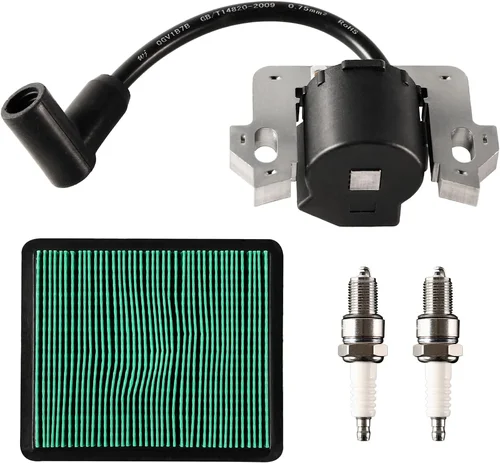
- Bundle with other maintenance items: Many retailers offer discounts when you purchase multiple parts together (e.g., coil + spark plug + air filter). This saves money and ensures all components are fresh and compatible.
- Check for rebates or loyalty programs: Honda and some aftermarket brands occasionally run rebate promotions. Sign up for newsletters from tool retailers to stay informed about exclusive deals.
- Read recent reviews, not just star ratings: A 5-star average can be misleading if older reviews praise a product that’s since been downgraded. Focus on feedback from the last 6–12 months to gauge current quality.
- Test before finalizing installation: Once installed, run the engine and observe idle stability, throttle response, and ease of starting. If performance seems off, double-check the air gap and wiring before assuming the coil is defective.
- Keep your old coil as a diagnostic tool: If the new coil doesn’t solve the no-start issue, temporarily reinstall the old one to confirm whether the problem lies elsewhere (e.g., fuel system or compression).
- Document your purchase: Save receipts, warranty info, and installation notes. This helps with future troubleshooting and validates warranty claims if needed.

Frequently Asked Questions
Q: How do I know if my GCV160 ignition coil is bad?
A: Common signs include difficulty starting, engine sputtering, loss of power, or complete failure to start. Use a spark tester to check for spark at the plug wire. No spark or a weak orange/yellow spark (instead of bright blue) indicates a faulty coil.
Q: Can I test an ignition coil with a multimeter?
A: Yes. Set your multimeter to ohms (Ω). Measure primary resistance between the two small terminals (should read 0.5–2.0 ohms) and secondary resistance from the large terminal to ground (6,000–12,000 ohms). Infinite or zero readings suggest a short or open circuit.
Q: Is it safe to use a non-Honda ignition coil on my GCV160?
A: Yes, as long as it’s specifically designed for the GCV160 and meets OEM specifications. Reputable aftermarket brands like NGK or Champion are safe and reliable alternatives to genuine Honda parts.
Q: How often should I replace my ignition coil?
A: There’s no fixed interval—replace it only when it fails. However, if your engine is over 10 years old or has logged hundreds of hours, proactive replacement during major servicing can prevent unexpected breakdowns.
Q: Does the ignition coil affect fuel efficiency?
A: Indirectly, yes. A weak or failing coil can cause incomplete combustion, leading to wasted fuel, rough idle, and reduced power. A properly functioning coil ensures efficient burning of the air-fuel mixture.
Q: Can a bad ignition coil damage other engine parts?
A: Generally no, but a severely misfiring engine can overheat or flood the catalytic converter (if equipped). In rare cases, excessive voltage from a faulty coil could damage the spark plug or wiring.
Q: Do I need special tools to replace the ignition coil?
A: Basic hand tools (socket wrench, screwdriver) and a feeler gauge for setting the air gap are sufficient. No specialized equipment is required for most GCV160 models.
Q: What’s the correct air gap for a GCV160 ignition coil?
A: Typically 0.25–0.35 mm (0.010–0.014 inches). Refer to your engine’s service manual for exact specifications. Too wide = weak spark; too narrow = no spark or mechanical interference.
Q: Can I clean and reuse an old ignition coil?
A: Not recommended. Ignition coils are sealed units with internal windings that degrade over time. Cleaning the exterior won’t restore internal functionality, and reusing a failed coil risks repeated no-starts.
Q: Will a new ignition coil improve my engine’s performance?
A: Only if the old coil was failing. A new coil restores original performance but won’t increase horsepower or efficiency beyond factory design. For performance gains, consider other upgrades like high-flow air filters or tuned exhausts.
Our Final Recommendations
Best for Budget-Conscious Buyers: NGK Ignition Coil (Part #C7HA) – At around $28–$32, this coil delivers OEM-level reliability and performance at a fraction of the Honda genuine price. Widely available, easy to install, and backed by NGK’s reputation for quality.
Best Overall Value: Champion RC12YC Spark Plug + Compatible Coil Kit – Often sold as a bundle, this combo ensures both fresh ignition and optimal spark plug performance. Priced under $35, it’s ideal for routine maintenance or full restorations.
Best Premium Option: Honda Genuine Ignition Coil (30500-ZL8-015) – For those who demand factory perfection, this is the gold standard. Slightly more expensive ($50–$65) but guarantees exact fit, full warranty, and peace of mind.
Best for Beginners: Oregon 32-035 Ignition Coil – Comes with clear instructions, pre-set air gap, and durable construction. Designed for easy DIY installation, making it perfect for first-time repairers.
Best for Advanced Users: Performance Ignition Coil by ProPoint (for modified GCV160) – If you’ve upgraded your carburetor, camshaft, or exhaust, this high-output coil provides the extra spark energy needed for tuned engines. Use only with supporting modifications.
Conclusion: Making the Right Choice
Choosing the right ignition coil for your Honda GCV160 isn’t just about fixing a no-start problem—it’s about restoring confidence in your equipment. A quality coil ensures reliable starts, smooth operation, and long-term durability, whether you’re mowing the lawn, powering a generator during a storm, or cleaning your driveway with a pressure washer. By focusing on compatibility, build quality, and value—not just price—you’ll avoid common pitfalls and select a solution that truly meets your needs.
Remember, the best coil is the one that matches your engine’s specifications, fits your budget, and comes from a trusted source. Don’t rush the decision: take time to verify compatibility, read recent reviews, and consider bundling with other maintenance items for maximum value. And if you’re ever unsure, consult a certified small-engine technician—they can save you time, money, and frustration.
Your GCV160 deserves more than a quick fix. It deserves a repair that lasts. With the insights from this guide, you’re now equipped to make a smart, informed choice—and get back to work with a engine that starts on the first pull, every time.