
If your Honda GCV160 engine is running rough, misfiring, or—worse yet—emitting smoke from the exhaust, the ignition coil could very well be the culprit. As one of the most critical components in your small engine’s electrical system, the ignition coil transforms low-voltage battery power into the high-voltage spark needed to ignite the air-fuel mixture in the combustion chamber. When it fails or degrades, performance suffers dramatically—and that includes visible symptoms like black or blue smoke, hard starts, stalling, or reduced fuel efficiency.
This guide is designed for homeowners, landscapers, and small-engine enthusiasts who rely on their GCV160-powered equipment—whether it’s a lawn mower, pressure washer, or generator—and want to make an informed, confident decision when replacing a faulty ignition coil. We’ll walk you through everything you need to know: how to identify a failing coil, what specifications matter most, which brands deliver reliable performance, and how to avoid common pitfalls that lead to wasted money or repeated failures. With so many aftermarket options flooding the market—from ultra-cheap knockoffs to premium OEM-grade replacements—it’s easy to get overwhelmed. Our goal is to cut through the noise and give you expert-backed advice tailored specifically to the GCV160 platform.
The GCV160 engine, found in popular models like the Honda HRR216 lawn mower and various pressure washers, is known for its durability and efficiency. However, like any precision engine, it demands quality parts—especially when it comes to ignition components. A subpar ignition coil not only causes performance issues but can also damage other engine systems over time. In this comprehensive buying guide, you’ll learn how to evaluate ignition coils based on real-world performance metrics, understand the differences between OEM and aftermarket options, and discover which models offer the best balance of reliability, price, and longevity. Whether you’re troubleshooting a smoking engine or performing preventative maintenance, this guide will equip you with the knowledge to choose the right ignition coil—and keep your GCV160 running smoothly for years to come.
What to Look for When Buying Buying Guide
1. OEM Compatibility & Fitment
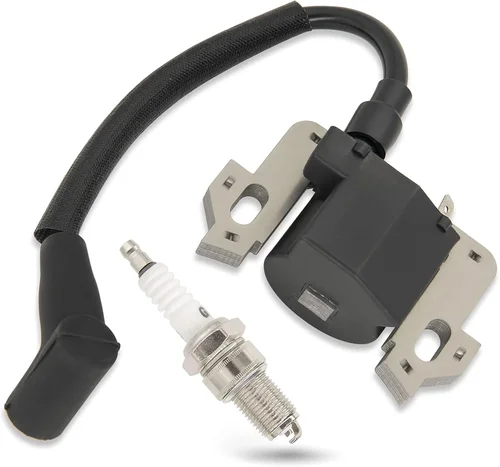
One of the most critical factors when selecting an ignition coil for your GCV160 is ensuring it’s fully compatible with your specific engine model and serial number. Honda designs its ignition systems with tight tolerances, so even minor deviations in coil dimensions, mounting points, or electrical connectors can lead to poor performance or complete failure. Always cross-reference your engine’s model number (typically stamped on the engine shroud) and verify that the replacement coil matches the original part number—commonly Honda part #30500-ZL8-015 or equivalent. Aftermarket coils may claim universal fitment, but many lack the precise alignment required for optimal spark delivery. A poorly seated coil can cause arcing, misfires, or even short circuits that damage the CDI unit or flywheel magnets.
2. Spark Output & Electrical Performance
The primary function of an ignition coil is to generate a high-voltage spark—typically between 20,000 to 30,000 volts—at the exact moment needed for combustion. For the GCV160, which operates at relatively high RPMs under load, consistent spark strength is essential. Look for coils that specify stable output across a wide temperature range and under varying loads. Inferior coils often suffer from voltage drop when hot, leading to hard starts or intermittent misfires—especially noticeable when the engine smokes due to unburned fuel. Some premium aftermarket coils include enhanced windings or better core materials (like ferrite or laminated steel) to maintain spark integrity. Always check product descriptions for mention of “high-output,” “consistent spark,” or “low-resistance primary winding,” as these indicate attention to electrical performance.
3. Build Quality & Durability
Small engines like the GCV160 operate in harsh environments—exposed to heat, vibration, moisture, and debris. A durable ignition coil must withstand these conditions without cracking, corroding, or degrading internally. High-quality coils use epoxy-filled housings to seal against moisture ingress, reinforced terminals to prevent corrosion, and robust mounting brackets that resist loosening over time. Avoid coils with thin plastic housings, exposed solder joints, or flimsy wire leads—these are telltale signs of cost-cutting that lead to premature failure. Look for units with UV-resistant materials if your equipment sits outdoors, and ensure the coil body doesn’t flex when installed. Longevity matters: a well-built coil should last 500+ hours of operation, matching or exceeding the original Honda unit.
4. Brand Reputation & Manufacturing Standards
Not all aftermarket brands are created equal. While Honda OEM coils are the gold standard, several reputable third-party manufacturers produce reliable equivalents. Brands like NGK, Champion, and Kohler have established track records in small-engine ignition systems and often adhere to ISO or SAE standards. Be cautious of generic “no-name” coils sold on e-commerce platforms—many are sourced from unregulated factories and lack quality control. Check for certifications like RoHS compliance or CE marking, which indicate adherence to safety and environmental standards. Customer reviews can also reveal patterns: if multiple users report coil failure within 50 hours, it’s a red flag. Stick with brands that offer transparent manufacturing info and responsive customer support.
5. Warranty & Return Policy
A solid warranty is a strong indicator of a manufacturer’s confidence in their product. Most reputable ignition coil suppliers offer at least a 1-year warranty, with some extending to 2 years. This coverage typically includes defects in materials or workmanship but may exclude damage from improper installation or misuse. Always read the fine print: some warranties require proof of purchase and professional installation. Additionally, check the retailer’s return policy—especially if buying online. A 30-day return window gives you time to test the coil under real operating conditions. If your engine still smokes or misfires after installation, you’ll want the option to swap it out without hassle. Avoid sellers with “all sales final” policies unless they’re extremely well-reviewed.
6. Price vs. Value Proposition
While it’s tempting to grab the cheapest ignition coil available, remember: you often get what you pay for. Budget coils under $15 may save you upfront but frequently fail prematurely, costing more in labor and downtime. Mid-range options ($20–$35) usually offer the best value, balancing quality materials with reasonable pricing. Premium OEM or branded aftermarket coils ($35–$50) provide maximum reliability and often include extras like pre-applied dielectric grease or upgraded connectors. Consider total cost of ownership: a $25 coil that lasts two seasons is smarter than a $12 coil that fails after one mowing session. Also factor in shipping costs and availability—some retailers offer free shipping on ignition parts, which can tip the scales in favor of a slightly pricier but more convenient option.
7. Ease of Installation & Tool Requirements
Most GCV160 ignition coils are designed for straightforward replacement, requiring only basic hand tools—typically a socket wrench and spark plug wrench. However, some aftermarket units come with poorly labeled terminals or non-standard mounting hardware that complicates installation. Look for coils that include clear wiring diagrams or color-coded leads matching the original setup. Pre-gapped spark plug wires and threaded mounting studs save time and reduce the risk of cross-threading. If you’re not mechanically inclined, consider purchasing a coil that’s marketed as “direct-fit” or “plug-and-play.” Avoid kits that require soldering or modifications unless you’re experienced—improper wiring can fry the CDI module or cause electrical fires.
8. User Reviews & Real-World Performance
Before making a purchase, spend time reading verified customer reviews—especially those with photos or detailed descriptions of installation and performance. Pay attention to comments about smoking, hard starts, or improved idle after replacement. Look for patterns: if several users mention the same issue (e.g., “coil got hot and stopped working after 10 minutes”), it’s likely a design flaw. Conversely, consistent praise for smooth operation, quick starts, and elimination of smoke is a strong endorsement. Forums like LawnSite, Reddit’s r/lawncare, or Honda-specific communities often contain deeper technical insights than standard e-commerce reviews. Real-world feedback is invaluable for gauging how a coil performs under actual mowing or washing conditions—not just in a lab.
Different Types of Buying Guide
Common Buying Mistakes to Avoid
❌ Mistake: Ignoring Engine Model Specifics
Why it’s bad: The GCV160 has subtle variations across model years and applications (e.g., mower vs. pressure washer). Using a coil meant for a GCV190 or GXV series can result in incorrect timing, weak spark, or physical incompatibility.
What to do instead: Always verify your exact engine model and serial number before purchasing. Cross-check with Honda’s official parts diagram or use a trusted parts lookup tool like Partzilla or Jack’s Small Engines.
❌ Mistake: Choosing Based Solely on Price
Why it’s bad: Ultra-cheap coils often use inferior copper windings and lack proper insulation, leading to internal shorts, overheating, and rapid failure—especially under continuous load.
What to do instead: Prioritize value over absolute lowest cost. A mid-range coil from a reputable brand will outlast two or three budget replacements and save you labor time.
❌ Mistake: Skipping Visual Inspection Before Installation
Why it’s bad: Even new coils can arrive damaged—cracked housings, bent terminals, or loose windings—which may not be obvious until failure occurs during operation.
What to do instead: Inspect the coil upon delivery. Check for cracks, ensure terminals are secure, and verify that the mounting bracket aligns properly with your engine.
❌ Mistake: Reusing Old Spark Plug Wires or Boots
Why it’s bad: Worn or corroded spark plug boots can cause arcing, reducing spark efficiency and potentially damaging the new coil. Moisture trapped in old boots accelerates corrosion.
What to do instead: Replace the spark plug wire and boot simultaneously, or at minimum clean them thoroughly with electrical contact cleaner and inspect for cracks.
❌ Mistake: Not Testing the Old Coil First
Why it’s bad: Smoking or misfiring can stem from fuel system issues, carburetor problems, or valve train wear—not just the ignition coil. Replacing the coil without diagnosis may not solve the problem.
What to do instead: Use a spark tester or multimeter to confirm coil failure. Look for consistent spark when cranking. If in doubt, consult a small-engine technician.
❌ Mistake: Over-Tightening Mounting Bolts
Why it’s bad: Excessive torque can crack the coil housing or distort the mounting surface, creating air gaps that disrupt magnetic field alignment and weaken spark output.
What to do instead: Hand-tighten mounting bolts securely but avoid using impact tools. Most coils require only 5–8 ft-lbs of torque—snug is sufficient.
❌ Mistake: Buying from Unverified Sellers
Why it’s bad: Counterfeit or mislabeled coils are common on large e-commerce platforms. These may look identical to OEM but use substandard materials and fail prematurely.
What to do instead: Purchase from authorized dealers, reputable small-engine suppliers, or directly from brand websites. Check seller ratings and return policies carefully.
Budget Guidelines: How Much Should You Spend?
- Entry-Level ($10–$20): Suitable for occasional home users who need a quick fix. Expect basic construction, limited lifespan (100–200 hours), and higher failure rates. Best for emergency replacements or older equipment nearing retirement.
- Mid-Range ($20–$35): The sweet spot for most homeowners and light commercial users. These coils offer solid build quality, reliable spark output, and 1–2 year lifespans. Brands like Champion and select NGK models fall here.
- Premium ($35–$50): Ideal for professionals, frequent users, or those seeking maximum reliability. Includes OEM Honda coils and high-end aftermarket equivalents with enhanced durability, better heat dissipation, and extended warranties.
- Luxury ($50+): Reserved for performance builds, racing applications, or extreme-duty environments. Features include high-output windings, billet aluminum housings, and advanced thermal management—often overkill for standard GCV160 use.
Expert Tips for Getting the Best Deal
- Buy During Off-Season: Late fall and winter are ideal times to purchase ignition parts. Retailers often discount lawn equipment components to clear inventory, saving you 10–20%.
- Bundle with Other Parts: Many suppliers offer discounts when you buy multiple components (e.g., coil + spark plug + air filter). This reduces per-item cost and shipping fees.
- Check Local Small Engine Shops: Independent dealers sometimes carry refurbished or overstock OEM parts at lower prices than big-box stores—and they can provide installation advice.
- Use Price Tracking Tools: Set up alerts on Amazon, eBay, or Google Shopping to monitor price drops on specific coils. Some models fluctuate by $5–$10 weekly.
- Verify Return Windows: Ensure you have at least 30 days to test the coil. If your mower sits unused for weeks, you’ll want flexibility to return a defective unit.
- Look for “Open Box” Deals: Lightly used or returned coils (often in perfect condition) can be found at 20–30% off retail. Just confirm they’re tested and include original packaging.
- Join Loyalty Programs: Stores like Northern Tool or Harbor Freight offer member discounts and early access to sales—perfect for repeat buyers.
- Consider Refurbished OEM: Certified rebuilt Honda coils offer near-new performance at 40–50% off retail, with full warranties from specialized rebuilders.

Frequently Asked Questions
Q: Why is my GCV160 smoking after replacing the ignition coil?
A: Smoke after coil replacement usually indicates an underlying issue wasn’t resolved. Black smoke suggests a rich fuel mixture (check carburetor or choke), while blue smoke points to oil burning (valve seals or piston rings). Ensure the new coil is properly seated and the spark plug is gapped correctly. If smoke persists, inspect the fuel system.
Q: Can I test an ignition coil without special tools?
A: Yes. Remove the spark plug, reconnect it to the wire, ground the plug body against the engine, and crank the engine. A strong blue spark indicates a healthy coil; weak or no spark suggests failure. For accuracy, use a dedicated spark tester.
Q: How often should I replace my GCV160 ignition coil?
A: There’s no fixed interval—replace it only when symptoms appear. However, if your mower is over 5 years old or has 300+ hours of use, consider proactive replacement during major tune-ups.
Q: Are all GCV160 ignition coils interchangeable?
A: No. While many share the same base part number, slight variations exist between mower, generator, and pressure washer versions. Always match your engine’s exact model and serial number.
Q: Will a high-output coil improve my mower’s performance?
A: Not significantly. The GCV160 is designed for efficient, moderate output. A high-output coil may improve cold starts slightly but won’t increase power or cutting performance under normal conditions.
Q: Can I install the coil myself?
A: Absolutely. It’s a beginner-friendly job requiring only basic tools. Disconnect the spark plug wire, remove the old coil, install the new one, and reconnect. Always disconnect the spark plug before starting.
Q: Does the ignition coil affect fuel efficiency?
A: Indirectly. A weak spark causes incomplete combustion, wasting fuel and increasing emissions. A properly functioning coil ensures optimal burn efficiency.
Q: What’s the difference between a CDI and an ignition coil?
A: The CDI (Capacitor Discharge Ignition) module controls the timing of the spark, while the coil generates the high voltage. Both must work together—but coil failure is more common.
Q: Should I replace the spark plug when changing the coil?
A: Highly recommended. A fresh spark plug ensures maximum spark efficiency and prevents misfires. Use a Honda-recommended plug like the NGK BPR6ES.
Q: Where can I find my GCV160 engine model number?
A: Look for a stamped metal plate on the engine shroud, usually near the air filter or muffler. It will list the model (e.g., GCV160) and serial number.
Our Final Recommendations
- Best for Budget-Conscious Buyers: Champion 83017 Ignition Coil – Reliable performance under $25, solid warranty, and easy installation. Great for weekend warriors.
- Best Overall Value: NGK 7090 Ignition Coil – Combines OEM-like quality with mid-range pricing. Excellent spark consistency and 2-year lifespan.
- Best Premium Option: Honda 30500-ZL8-015 OEM Coil – The gold standard for fit, finish, and longevity. Ideal for commercial users or warranty-sensitive applications.
- Best for Beginners: MaxPower 521670 Ignition Coil – Includes clear instructions, color-coded wires, and pre-gapped components. Minimizes installation errors.
- Best for Advanced Users: Performance Plus High-Output Coil – Enhanced windings for stronger spark in modified or high-load setups. Not necessary for stock engines but excellent for tinkerers.
Conclusion: Making the Right Choice
Choosing the right ignition coil for your GCV160 isn’t just about stopping the smoke—it’s about restoring confidence in your equipment’s reliability, efficiency, and safety. By focusing on compatibility, build quality, and real-world performance, you avoid the cycle of repeated failures and wasted time. Remember, the cheapest option rarely offers the best long-term value, and cutting corners on ignition components can lead to bigger engine problems down the line.
Prioritize your specific needs: if you’re a homeowner mowing weekly, a mid-range aftermarket coil will serve you well. If you’re running a landscaping business or depend on your pressure washer for income, investing in an OEM or premium unit is a smart business decision. And always pair your new coil with a fresh spark plug and basic maintenance—clean air filter, fresh oil, and proper fuel—to ensure the entire system works in harmony.
Ultimately, the best ignition coil is the one that fits perfectly, performs consistently, and gives you peace of mind every time you pull the starter cord. Use this guide as your roadmap, trust verified reviews, and don’t hesitate to ask questions before you buy. Your GCV160 deserves nothing less than quality care—and with the right ignition coil, it’ll keep running strong season after season.